Catered Lunches Posts
Jimmy John’s Catering: Party Boxes, Box Lunches, and What Actually Feeds Your Team
Last Updated on 2026-09-21 07:13 PM
The short version: Jimmy John’s catering centers on party boxes of sandwich thirds and individual box lunches that run roughly $10 to $14 per person. The quick sizing math: an 18-piece party box feeds 6 to 9, a 30-piece feeds 10 to 15, and same-day orders are usually possible for smaller groups. Two things planners should know before ordering: ask for no mayo with packets on the side so the sandwiches stay fresh, and watch out for Slims in the online box lunch menu, which are plain sandwiches with no veggies or sauce.
Prices vary by location. Figures in this guide were last verified September 2026.
Jimmy John’s is one of the easiest office catering orders there is: sandwiches everyone recognizes, formats built for groups, and stores that genuinely specialize in short-notice orders. The catch is that the format names confuse first-time orderers, and a couple of small ordering decisions make the difference between a fresh spread and a soggy one.
We have been delivering office meals since 1995, and sandwich catering is a staple of the lunch programs we run. This guide covers the party box math, the box lunch details, real costs, and the ordering tips that catering staff themselves recommend. Waiter.com is not affiliated with Jimmy John’s.
Does Jimmy John’s cater?
Yes. Jimmy John’s offers catering at locations nationwide through party boxes, box lunches, catering bundles, sides, and desserts, available for pickup or delivery. The chain built its reputation on speed, and that carries into catering: staff describe a few 30-piece boxes as an easy same-day order, though 24 hours of notice is the standard courtesy and large orders need more.
Jimmy John’s catering at a glance
| Question | Answer |
| Formats | Party boxes (sandwich thirds), box lunches, catering bundles, wrap boxes, sides, desserts |
| Typical cost | Roughly $10 to $14 per person for box lunches; party boxes usually less per head |
| Lead time | Same-day often works for small orders; 24 hours is standard; multi-hundred box lunch orders need several days |
| Delivery | Available; catering is usually delivered by store staff, but confirm, since regular delivery is third-party in many markets |
| Payment | Many stores require prepayment on large orders |
| Dietary notes | Any sandwich can be made as a gluten-free Unwich lettuce wrap; vegetarian and vegan options are minimal |
Party boxes explained: 18-piece vs 30-piece vs 12-Pack
Party boxes are the shareable format: 8 inch sandwiches cut into thirds, wrapped for grab-and-go, no utensils needed. Sizing them is the question every planner Googles, so here is the math straight from Jimmy John’s own guidance.
| Box | What’s inside | Feeds | Best for |
| 18-Piece Party Box | 18 sandwich thirds (6 sandwiches) | 6 to 9 people | Small meetings |
| 30-Piece Party Box | 30 sandwich thirds (10 sandwiches) | 10 to 15 people | Mid-size office lunches; usually the best value per person |
| 12-Pack Party Box | 12 half sandwiches or wraps | 6 to 9 people | Lighter meals; wrap crowds |
| Catering Bundles | Sandwiches plus chips, cookies, sides at a bundled price | Small feeds 6 to 10; Large feeds 15 to 20 | The easy button for a complete spread |
Plan on 2 to 3 thirds per person. Both the 18 and 30-piece boxes let you mix any Original or Favorite sandwiches, on bread or as Unwich lettuce wraps, so one box can cover most of a team’s preferences.
Box lunches: what’s inside, what they cost, and the Slims trap
A box lunch is one complete meal per person: an 8 inch sandwich or wrap, chips, a pickle spear, and a cookie, typically $10 to $14 each depending on location and sandwich choice. It is the standard format for seated meetings, trainings, and any event where handing each person their own labeled box beats a shared spread.
The Slims trap: when you order box lunches online, the menu lists both Original sandwiches and Slims, and they look similar. Slims are just bread, meat, and cheese: no lettuce, no tomato, no mayo, no sauce. They are cheaper for a reason, and store managers say offices mis-order them constantly and only find out when 40 plain sandwiches arrive. If you want dressed sandwiches, pick Originals or Favorites, and if the menu confuses you at all, order by phone and let the store walk you through it.
The flip side: Slims can be a deliberate strategy for large events. Staff suggest ordering mixed Slims and setting out a self-serve toppings table, which costs less per box, sidesteps everyone’s topping preferences, and keeps sandwiches from sitting dressed for hours.
What Jimmy John’s catering costs by headcount
| Group size | Party box route | Box lunches |
| 10 people | $70 to $110 | $100 to $140 |
| 20 people | $140 to $210 | $200 to $280 |
| 50 people | $330 to $520 | $500 to $700 |
Add chips, cookies, pickle buckets, and gallon drinks per person as needed, plus delivery fees and tax. On tipping, staff are candid: around 10 percent on a pickup catering order is appreciated and gets split among the crew who made it, delivery tips go to the driver, and cash is the surest way a tip reaches the people who did the work. They are equally candid that regular customers who tip well get noticeably attentive service.
Sandwich math for large groups: how many boxes for 40 guests
Jimmy John’s retired its old sandwich platters, so party boxes are the platter format now. For 40 guests as a full lunch, order three 30-piece boxes (90 thirds, just over 2 per person) and round up to four if appetites run big or the sandwiches are the whole meal. For 40 guests as one of several foods, two 30-piece boxes covers it. The same math scales: one 30-piece box per 10 to 15 people as a meal, per 15 to 20 as a snack.
Ordering, lead times, and the no-mayo rule
How far ahead: 24 hours of notice is the standard ask and guarantees the store lays out enough bread for your order. That said, small orders move fast: staff describe a few 30-piece boxes as doable within an hour or two, and same-day catering is a point of pride at many stores. Multi-hundred box lunch orders are a different animal, planned days to a week out with a final headcount about three days before. Expect to prepay on large orders.
The no-mayo rule: the most consistent advice from Jimmy John’s workers and managers is to order catering with no mayo and request mayo and mustard packets on the side. Catering is made ahead of your pickup or delivery window, and mayo is what makes sandwiches soggy by the time they are eaten. Some stores do this by default on every catering order. If your event is hours after pickup, go further and ask for tomatoes or all veggies on the side; stores can pack them separately.
On delivery: catering orders are generally delivered by the store’s own drivers. If delivery timing matters for your event, confirm when ordering that a store driver is bringing it.
Dietary options: the Unwich, and what’s missing
The Unwich is the genuine strength here: any sandwich, including every party box and box lunch, can be made as a lettuce wrap, which cleanly covers gluten-free and low-carb teammates at no coordination cost. Specify it per sandwich when ordering.
Vegetarian and vegan coverage is the weak spot. The only meatless sandwich is the veggie, and the vegan version of it is essentially lettuce, tomato, and avocado spread on bread, which plant-based employees describe as bleak. One more planning note: the condiment lineup was simplified in recent years, so yellow mustard is the only mustard, and specialty sauces vary. If your team skews vegetarian or has layered dietary needs, this is where a single-chain order starts to strain.
Is Jimmy John’s catering right for your office?
Order it when: you need reliable, fast, crowd-friendly food at roughly $7 to $14 per person, especially on short notice. The party box format is well designed for offices, the Unwich handles gluten-free without drama, and stores routinely execute huge orders when given lead time.
Look elsewhere when: your team has real vegetarian or vegan representation, delivery reliability is mission critical and the store cannot confirm an in-house driver, or, the big one, you are feeding the same office every week. After three decades of running office lunch catering programs, the pattern is universal: sandwiches are a beloved week one and a mutiny by week four. Variety is what keeps a lunch program alive.
Want sandwiches Tuesday and something different Thursday? Waiter.com’s recurring meal programs rotate hundreds of local restaurants so lunch never gets stale. We have delivered office meals since 1995. Get a quote for your team at Waiter.com.
Jimmy John’s catering FAQ
How many people does a 30-piece Jimmy John’s party box feed?
A 30-piece party box feeds 10 to 15 people as a meal, at 2 to 3 sandwich thirds each. As a snack alongside other food, it stretches to 15 to 20 people.
How much is Jimmy John’s 30 party box?
Pricing varies by location and sandwich selection, but a 30-piece party box generally lands in the $75 to $100 range, which works out to roughly $5 to $8 per person for a group of 12 to 15. Premium sandwich choices push the total up.
How much does Jimmy John’s catering cost?
Plan on roughly $10 to $14 per person for box lunches and less per head for party boxes. Sides, drinks, delivery fees, and tax are additional, and prices vary by location.
How many sandwich platters do I need for 40 guests?
Jimmy John’s uses party boxes rather than platters. For 40 guests eating sandwiches as the meal, order three 30-piece party boxes, and add a fourth for bigger appetites. If sandwiches are one of several foods, two 30-piece boxes is enough. Feeding a bigger crowd or setting up a recurring program? Get a quote, or browse restaurants that deliver to your office at Waiter.com.
Chick-fil-A Catering: Menu, Real Costs, and Whether It Works for Your Office
Last Updated on 2026-09-08 09:49 AM
The short version: Chick-fil-A catering runs roughly $7 to $13 per person for individually packaged meals, with shared trays often coming in lower per head. The menu splits into two formats, self-serve trays and boxed packaged meals, and most locations deliver with their own staff. The two things that catch office planners off guard: every Chick-fil-A is closed on Sunday, and the app or website will not always accept large or short-notice orders that the store itself will happily take by phone.
*Note that prices may vary by location.
Chick-fil-A is arguably the default office catering order in America, and for a reason: predictable quality, broad appeal, and a price point most managers approve without blinking. But the catering program has more moving parts than the drive-thru, including a separate menu, location-dependent minimums, and a Sunday closure that has surprised more than one event planner.
We have been delivering office meals since 1995, and Chick-fil-A comes up constantly in the lunch programs we run. This guide covers the real costs, the tray versus packaged meal decision, ordering mechanics that only catering staff usually know, and an honest verdict on when it fits an office and when it does not. Waiter.com is not affiliated with Chick-fil-A.
Does Chick-fil-A cater? The short answer
Yes. Chick-fil-A offers catering at most of its 3,000+ US locations through a dedicated catering menu of trays, packaged meals, breakfast items, salads, and gallon beverages, available for pickup or delivery. Many locations run dedicated catering teams and deliver with their own drivers rather than third-party couriers, which is rare in fast food. Orders can be placed online, in the Chick-fil-A app, or by calling the restaurant, and the phone is often the most flexible channel for large or short-notice orders.
Chick-fil-A catering at a glance
| Question | Answer |
| Formats | Shared trays (nuggets, strips, sandwiches, wraps, salads, fruit) and individually packaged meals |
| Typical cost | Roughly $7 to $13 per person for packaged meals; trays often less per head |
| Minimums | No universal pickup minimum; delivery minimums vary by location (some run $200+) |
| Lead time | Same-day is often possible by phone; 24 to 48 hours for large orders; several days around holidays |
| Delivery | In-house at many locations; drop-off style, no staffed setup |
| Sundays | Closed. Chilled trays picked up Saturday are the sanctioned workaround (details below) |
| Dietary notes | Grilled options and salads exist; vegetarian and vegan choices are thin |
Trays vs packaged meals: which format fits your event
This is the first real decision, and it changes both the budget and the logistics.
Trays are the buffet approach: large platters of nuggets, strips, sandwiches, wraps, or fruit that people serve themselves. They are the cheaper per-person option and work best when the group is mingling, grazing, or eating in shifts. You will need plates, napkins, and serving space.
Packaged meals are individually boxed portions, typically an entree with waffle potato chips and a chocolate chunk cookie. They cost more per head but eliminate serving logistics entirely, which makes them the standard choice for seated meetings, trainings, and any office where grab-and-go matters.
One quirk worth knowing: waffle fries are not on the catering menu because they do not hold quality in transit, so waffle chips are the standard side. Catering staff also note that the online catering menu is a subset of what stores can actually do. Order by phone or in person and most locations will cater nearly anything on the regular menu for pickup.
Chick-fil-A nugget tray sizes and prices
The nugget tray is the signature catering item, and sizing it correctly is where most planners either overspend or run short. Trays come hot, or chilled with reheating instructions.
| Tray size | Piece count | Feeds (as a meal) | Typical price |
| Small | 64 nuggets | About 8 people | $30 to $37 |
| Medium | 120 nuggets | About 15 people | $55 to $67 |
| Large | 200 nuggets | About 25 people | $90 to $110 |
Plan on roughly 8 nuggets per person as a main with sides, and more like 4 to 5 per person if the tray is one of several items. A large tray works out to well under $5 per person, which is why it anchors so many office spreads.
What Chick-fil-A catering costs by headcount
Real-world budgets, assuming packaged meals or a tray spread with sides and a gallon beverage. Businesses that order regularly report landing around $10 per person for a sandwich, chips, cookie, and drink with delivery included, which is a fair planning number.
| Group size | Tray-based spread | Packaged meals |
| 10 people | $70 to $110 | $90 to $130 |
| 20 people | $130 to $200 | $180 to $260 |
| 50 people | $300 to $475 | $450 to $650 |
Delivery fees and taxes are on top, and vary by location. If your office orders on a regular schedule, it is worth talking to the store directly: operators have discretion on pricing, and catering staff report that some locations extend pickup pricing on delivery for reliable repeat business accounts.
How to order, and how far ahead
Under about 15 people: skip formal catering. Catering team members consistently say an order this size is easily handled as a regular app or phone order. Place it in the app with a scheduled pickup, or call the store 20 to 30 minutes ahead, and it will be ready.
15 to 50 people: use the catering menu at chick-fil-a.com/catering or the app, ideally 24 hours out. Same-day catering is often possible, but the app sometimes will not accept next-day or large orders even when the store can do them. When the app balks, call. Mobile orders can also be capped at $50 to $125 depending on the location, which is another reason big orders fail online.
50 people and up, or a major event: call and coordinate with the store’s catering lead directly. Stores routinely handle four and five figure orders, but the ones that go smoothly are planned days to weeks ahead. Around holidays, book several days early: individual stores juggle anywhere from 50 to several hundred catering orders on peak days like Christmas Eve.
Three pickup tips from catering staff: First, bring your own insulated bags, because stores generally do not lend out their thermal carriers for pickup orders. Second, be on time. Catering orders are not finalized until handoff, food is timed to your pickup slot, and arriving very late, especially near closing, is where things go wrong. Third, if you order through the app while picking up in store, scan your Chick-fil-A One account: catering orders earn points like any other order, and on office-sized orders those add up fast for whoever places them. Receipts can be claimed retroactively for about a week.
The Sunday problem, and the chilled tray workaround
Every Chick-fil-A is closed on Sunday, with no exceptions for catering. If your event is on a Sunday, no location will deliver or open for pickup, and this catches planners off guard every football season.
There is a sanctioned workaround that most guides never mention: the chilled tray. Request it about a day in advance and the store prepares your nugget or strip tray cold, chilled for at least six hours, with instructions for reheating in your own oven. You pick it up Saturday and serve it Sunday. Catering staff describe these as a staple of Super Bowl weekends and holiday closures; one location reported converting more than a hundred Christmas Eve orders to chilled trays. It is the only way to serve Chick-fil-A at a Sunday event, and it works.
The other honest limitations: this is drop-off catering, not staffed service, so setup is on you. And the menu is thin for vegetarians and vegans beyond salads and sides, which matters more the larger and more varied your team gets.
Is Chick-fil-A catering right for your office?
Order it when: you need a crowd-pleaser for a weekday lunch, meeting, or celebration, the budget is around $10 per person, and someone can handle setup. Few options match its cost-to-quality ratio, and the in-house delivery is genuinely reliable.
Look elsewhere when: the event is on a Sunday and a reheated tray will not cut it, your team has significant dietary variety, you need staffed service, or, the big one, you are feeding the same office every week. After three decades of running office lunch catering programs, we can tell you the failure mode of any single-restaurant plan is monotony. Even the most beloved chicken sandwich gets old by week four.
CTA BLOCK: Love Chick-fil-A, but need Sunday coverage, dietary variety, or lunch handled every week? Waiter.com has delivered office meals from hundreds of local restaurants since 1995. Rotate cuisines, cover every diet, and never think about pickup logistics again.
Chick-fil-A catering FAQ
How much does Chick-fil-A catering cost?
Plan on roughly $7 to $13 per person for packaged meals and less per head for shared trays, with businesses commonly reporting about $10 per person for a sandwich, chips, cookie, and drink. Prices vary by location, and delivery fees and tax are additional.
How much is a 200 nugget tray at Chick-fil-A?
The large nugget tray holds 200 nuggets and typically runs about $90 to $110 depending on location. As a main course it feeds around 25 people, which puts it well under $5 per person.
How many people will 30 Chick-fil-A nuggets feed?
A 30-count feeds 3 to 4 people as a main course at about 8 nuggets each, or 6 to 7 people as a snack alongside other food. For groups of 8 or more, a small tray is usually the better value.
Does Chick-fil-A cater on Sundays?
No. All locations are closed Sunday, including for catering pickup and delivery. The workaround is a chilled tray ordered a day ahead and picked up Saturday, which comes with reheating instructions so you can serve it hot at a Sunday event.
Planning a spread for a bigger crowd or a recurring program? Get a quote, or browse restaurants that deliver to your office at Waiter.com.
Office Lunch Catering for Office Admins: Team Meals Without the Headaches
Last Updated on 2026-09-04 03:28 PM

Somewhere along the way, “can you order lunch?” became a second job.
You’re collecting orders in a spreadsheet, chasing down the one person who didn’t reply, remembering who’s gluten free, and hoping the food shows up before a noon meeting.
This guide covers the situations admins actually deal with and how to make each one somebody else’s problem. Specifically, ours.
How do I set up recurring lunch delivery for my office?
The short answer: pick a provider that treats it as a program, not a series of one-off orders.
With Waiter.com, you set the schedule, whether that’s weekly, twice a week, or daily, along with the budget per person and any dietary parameters. From there, we handle restaurant rotation, ordering, and delivery. You approve menus instead of building them from scratch.
Menu fatigue can wear down even a well-run office lunch program. Rotating across local restaurants and cuisines, Thai one week, Mediterranean the next, keeps lunch feeling like a benefit instead of another repetitive routine.
Because Waiter.com has been working with restaurants since 1995, there’s enough variety in our markets to keep a recurring program from feeling like the same few menus on repeat.
Setup takes one conversation. Tell us your headcount, schedule, and budget, and we’ll send a sample menu plan asap. Start that conversation here.
What’s the best way to handle dietary restrictions when ordering for a group?
Collect restrictions once, then build them into the process instead of starting over every time you order.
The spreadsheet-per-order approach doesn’t work because dietary needs usually don’t change weekly, but the collection process resets every time.
When you set up an account with Waiter.com, dietary requirements can be incorporated into the way meals are planned, including vegetarian, vegan, gluten-free, halal, kosher-style, and allergy considerations. Individually labeled meals can also make it much easier for employees to know which order is theirs when the food arrives.
For a 50-person office with a typical mix of needs, this can mean the difference between placing an order quickly and spending the afternoon chasing people down in Slack.
I need lunch for a meeting tomorrow. Who can I actually count on?
For last-minute orders, reliability matters more than having hundreds of choices.
A client meeting with no food at 12:15 is a visible failure, and it usually lands on the person who placed the order.
This is where working with a provider that regularly handles workplace delivery can make a difference. Waiter.com coordinates office meal delivery in the markets we serve and offices have relied on us for decades when timing matters.
For especially tight turnarounds, call us and we’ll tell you what’s realistically doable rather than accepting an order we can’t confidently deliver on time.
Our headcount changes every week. Can catering flex with us?
Yes, and it should.
Hybrid schedules mean Tuesday’s 80 people might be Thursday’s 45, so a recurring lunch program needs to flex with attendance instead of forcing you into a fixed headcount.
Waiter.com programs can adjust headcount from one order to the next. Update your number by the cutoff and the order can be adjusted accordingly.
Can I get one invoice instead of fifty receipts?
One consolidated invoice can make office food much easier to manage, especially if you’ve ever ended a quarter reconciling a pile of lunch receipts against a corporate card statement.
Corporate accounts with Waiter.com are designed to simplify billing and give finance a clearer record of what was ordered and when.
Companies like Microsoft, Intel, and EA have worked with Waiter.com and enterprise-friendly billing is an important part of making an ongoing meal program manageable.
What if we’d rather support local restaurants than a national chain?
That’s a big part of how Waiter.com works.
We work with restaurants in the markets we serve, giving offices access to local options and a broader mix of cuisines instead of defaulting to the same few national chains.
For employee appreciation events especially, bringing in a great local restaurant can feel more thoughtful than another round of standard catering trays. It gives your team something they may already know and love without creating more work for the person organizing lunch.
The bottom line for busy admins
You don’t need another app to manage. You need the food part of your job to quietly disappear into someone else’s competent hands.
That’s been our business since 1995.
Here’s the easiest next step: Request a quote with your city, and approximate headcount. We’ll come back with a plan, a sample menu, and a real human you can email when anything comes up.
Chipotle Catering: Menu, Real Costs, and Whether It Works for Your Office
Last Updated on 2026-08-21 11:40 AM
The short version: Chipotle catering runs roughly $12 to $13.50 per person for a standard Build Your Own spread, but real orders land closer to $15 to $20 per head once you add a second protein, delivery, fees, tax and tip. Minimums are 6 people for pre-made Burritos by the Box and 10 for a Build Your Own spread, and you need at least 24 hours notice. It is genuinely good for a one-off: familiar, easy to order, and hard for a big group to dislike. It is a weak fit for a recurring office program, because everyone eats the same cuisine every time and there is no way to give people individual budgets or ordering choices. The single biggest source of disappointment is a menu wording trap we explain below, so read the cost section before you order.
Does Chipotle cater?
Yes. Chipotle has offered catering nationwide for years and it is one of the most popular fast-casual catering options in the country. You order through Chipotle’s catering system at chipotle.com/catering, through the app, or by calling your local store, you give at least 24 hours notice, and you can order for groups from 6 people up to around 200.
One point that trips people up right away: Build-Your-Own Chipotle is not the same as Chipotle Catering. Build-Your-Own Chipotle is a small meal kit for four to six people that you order like a normal online order. Chipotle Catering is the large-format service that requires 24 hours notice and hits the minimums above. If you have a small team and a same-day problem, the meal kit is what you actually want.
Chipotle catering at a glance
| Formats | Burritos by the Box (pre-made, individually wrapped) and Build Your Own spread (buffet-style) |
| Minimum order | 6 people (Burritos by the Box), 10 people (Build Your Own) |
| Maximum order | Around 200 people |
| Cost per person | About $12 to $13.50 base for Build Your Own, $8.75 to $11 for Burritos by the Box. Real all-in cost runs higher (see below) |
| Lead time | 24 hours minimum. 3 to 5 days for groups over 50 |
| What’s included | Proteins, rice, beans, salsas, cheese, sour cream, lettuce, fajita veggies, tortillas, plus serving utensils, plates, napkins and ingredient labels. Guacamole and queso cost extra |
| Proteins | Chicken, steak, barbacoa, carnitas, sofritas (vegan), fajita veggies |
| How to order | chipotle.com/catering, the Chipotle app, or by calling the store |
| Delivery | $10 to $30 depending on distance, often free over $150. Delivery runs through third-party drivers |
What’s on the Chipotle catering menu
The catering menu is a curated version of the regular menu: same ingredients, same proteins, packaged for groups. There are two core formats.
Burritos by the Box
Pre-rolled burritos, individually wrapped and labeled, packed in boxes. You pick the proteins and Chipotle builds them, and each box typically comes with chips, salsa and sour cream on the side. This is the simplest option and the fastest to hand out, because nobody assembles anything. The tradeoff is that you are choosing for other people. It works best for a small group where everyone likes similar things.
Build Your Own spread
A buffet-style setup with proteins, rice, beans and toppings in separate trays so everyone builds their own bowl, burrito, tacos or salad. It comes in Single, Double and Triple protein versions, and the price scales with how many proteins you include. This is the format most offices choose, because it solves the customization problem and covers mixed preferences at one table. It also needs a table, someone to set it out, and a few minutes of your time. Chips and dips are an add-on, usually around $40 for a tray that serves 10 to 15.
What “Double” actually means, and why it matters
Here is the one thing to understand before you order, because it is the root of nearly every “we got shorted” complaint out there: on the catering menu, “Double” does not mean double the food. It means you get to choose two proteins. The total amount of meat is still portioned at roughly one serving per person, just split across the two proteins you picked.
This is not obvious, because on a regular in-store entree “double meat” literally means more meat. Catering uses the word differently, and the gap between those two meanings has burned a lot of people. In one widely-read r/Chipotle catering thread, an office admin collected $15 a head for a 20-person “double protein” order expecting a generous spread, and was stunned by how little arrived. Chipotle employees in the same thread, including a store manager, confirmed the food was portioned correctly to spec. Nobody was cheated. The order simply did not mean what the word “double” led them to expect.
If you want genuinely larger portions, order Triple, or step up your headcount, or order individual entrees instead. Do not assume “Double” solves a portion-size worry, because it does not.
What Chipotle catering does not do
- No breakfast. Morning meetings are out.
- One cuisine. Everyone eats Mexican-inspired food. Fine once, a problem on repeat.
- Basic allergen labeling only. Labels list contents and name the item, but they do not carry explicit gluten-free, vegetarian or vegan callouts. The upside: because a Build Your Own spread is separated and self-serve, people with common dietary needs can usually pick what works for them. Sofritas covers vegan, and bowls without tortillas cover gluten-free.
- No staff. Nobody sets up, refills or cleans up. The food arrives and the rest is on you.
What Chipotle catering actually costs
Published per-person rates as of mid-2026 run about $12.50 for chicken or sofritas, $13.50 for steak, barbacoa or carnitas, and $12 for fajita veggies on a Build Your Own spread, with Burritos by the Box lower at roughly $8.75 to $11 per person. Pricing appears to be fairly consistent nationally, with less regional variation than Chipotle’s in-store menu.
But the sticker rate is not what people actually pay. Here is the honest all-in picture, drawn from what real customers reported ordering across a dozen catering threads. Treat these as reported real-world figures, not a quote, and confirm current pricing when you order.
| Headcount | Format | Reported all-in total | Effective per person | Notes |
|---|---|---|---|---|
| 10 | Build Your Own, single | ~$170 minimum | ~$17 | The 10-person minimum sets a price floor |
| 20 | Build Your Own, double | ~$300 to $310 | ~$15 to $15.55 | The most common office order, and the most common complaint |
| 50 | Build Your Own | ~$700 to $900 | ~$14 to $18 | Frequently described as not enough food for the price |
| 100 | Build Your Own | ~$1,600+ | ~$16 to $23 | Large orders often need 3 to 5 days notice and may be split |
Now the part that surprises almost everyone, and it is the loudest, most repeated theme across every thread we read: the per-person price does not drop as your group gets bigger, and catering often costs more per head than ordering individual entrees.
Most catering rewards volume. Chipotle catering is priced per person at a fairly flat rate, so feeding 100 people costs close to ten times feeding 10. There is no bulk discount to chase. Worse, multiple people did the math and found that catering ran them $14 to $17 per person for the same food that costs $8 to $12 as an individual bowl or burrito ordered in store. That is backwards from how bulk pricing usually works, and it is the number one reason experienced office admins in these threads say they would just order individual bowls next time. On a $1,600 order and a widely-discussed $700 Friendsgiving order, the near-universal reaction was that the food on the table did not look like what was paid for.
What else lands on the bill
- Delivery fee, roughly $10 to $30, often waived over $150
- The protein upcharge for Double or Triple, which buys variety, not more total food
- Add-ons like chips, guacamole and queso, around $40 a tray
- Tax
- Tip, if you use delivery. One important catch: tips added through the delivery app go to the driver, not the crew who assembled your order. If you want to reward the people who made your food, tip in store.
If you are working a tight budget, read our guide to cheap catering ideas for the office alongside this one.
How to order and how far ahead
Order at chipotle.com/catering, through the app, or by calling your local store. For anything complicated or close to the deadline, calling is the better move.
Lead times, realistically:
- 24 hours is the stated minimum and it is firm. There is no same-day catering.
- 3 to 5 days for groups over 50. Bigger orders need more runway.
- Capacity is real. Stores cap how many catering units they can produce per hour. One customer had to split a large order into separate spreads placed in 15-minute increments just to get it through the system. For very large orders, plan early and expect it may need to be arranged in pieces.
The step nobody tells you: call the store after you order online
This is the most useful piece of advice in this entire guide, and it comes straight from Chipotle employees venting about catering. Placing the order online is not enough. The order lands in the system, but the store needs a human heads-up to actually staff and prep for it. An entire thread exists begging customers to call ahead, because crews get blindsided by large orders due right at open and end up running the regular lunch line dry to fill them. So: place the order online, then call the store, confirm they see it, and confirm they are staffed for your pickup or delivery time. This one phone call prevents most catering disasters.
Pick up if you can
On large orders, picking up in person lets you check everything before you leave. Delivery, by contrast, is where missing items get discovered too late, and the classic casualty is the forgotten bag of chips or tray of queso. If the order is important and the logistics allow it, send someone to pick it up and eyeball it at the counter.
What actually shows up: food, serving utensils, plates, napkins, forks, ingredient labels, and warming trays on Build Your Own spreads to hold temperature. No staff, no setup, no cleanup.
How much Chipotle catering do you actually need?
Most people over-order, especially first-timers, and especially when there is other food at the event. Chipotle portions catering to roughly one serving per person, weighed to spec, which feels smaller than the heaping bowl you get in store. That mismatch is exactly why so many people feel shorted even when the order is technically correct.
A few practical adjustments:
- Order for who will actually eat a full meal, usually 80 to 90 percent of your headcount for a standard lunch.
- If Chipotle is alongside other food, drop the count further. A burrito bowl is a complete meal and people will not build a full one if they have already grazed.
- Do not count on “Double” to add food. It adds a protein choice, not volume.
- Chips and guac get eaten regardless. Order for the room.
For groups over 50, or when mixing Chipotle with other catering, our guide on how to order food for large groups walks through the math.
Is Chipotle catering worth it for an office lunch?
For the right occasion, honestly yes. We have coordinated office meals since 1995, and Chipotle is a legitimately good answer to a specific question. It is a poor answer to a different one, and the difference is what decides whether you will be happy.
Where Chipotle wins
- Low base cost per head for food people recognize.
- Universal appeal. Almost nobody objects to Chipotle, which matters for a big mixed group.
- Fast and simple to order. One transaction, done in five minutes.
- Easy basic dietary coverage. Sofritas and fajita veggies handle vegan and vegetarian without a special order.
- Scales to large groups, up to around 200 from one order.
Where it breaks down
These are structural, not fixable with a better order:
- One cuisine, every time. Serve it weekly and you will hear about it fast. Menu fatigue is the top reason offices rotate away.
- No individual ordering. Everyone eats from the same spread. Nobody picks their own meal.
- No per-employee budgets. You cannot give someone an allowance to spend. It is one order, one total.
- No invoicing or central billing. Someone fronts a card and files an expense report, every time.
- No recurring scheduling. There is no standing weekly order. You place it manually, forever.
- No dedicated contact. If something goes wrong at 11:45 on a Thursday, you are calling a store mid rush.
- Delivery is third-party. No dedicated setup and no clean accountability chain when an order is late or short.
Choose Chipotle when
It is a one-off, the group is large and mixed, budget matters more than variety, you have at least a day of notice, and nobody needs a specially handled meal.
Choose something else when
You are feeding the same people on a schedule, your team has real dietary complexity, it is a client-facing meal, you need invoicing and clean expense reporting, or you want people to have a say in what they eat. Worth noting: the most common alternative real customers recommend in these threads is ordering from a local Mexican restaurant or taqueria, which frequently delivers more food for the money. That is precisely the model a managed program like ours is built on.
Chipotle catering vs other office catering options
| Chipotle direct | Managed program (Waiter.com) | |
|---|---|---|
| Base cost per person | Lowest | Mid |
| Cuisine variety | One | Wide, rotating |
| Recurring scheduling | No | Yes |
| Individual ordering | No | Yes |
| Per-employee budgets | No | Yes |
| Dietary accommodation | Basic, self-serve | Managed per person |
| Invoicing / central billing | No | Yes |
| Delivery and setup | Third-party, no setup | Dedicated |
| Best for | One-off large groups | Recurring team meals |
Credit where it is due: on base cost per person, Chipotle beats almost everything, including us. If your only variable is budget and you are ordering once, order Chipotle and call the store to confirm.
Feeding the same team every week?
Chipotle is a solid pick for a one-off. Feeding the same people on a schedule is a different problem: rotating cuisines so nobody gets bored, dietary needs handled per person, per-employee budgets, and one invoice at month end instead of thirty expense reports.
That is what a managed meal program handles, and it is built on the exact thing people keep recommending, real local restaurants instead of a chain. We have run these programs for offices since 1995.
See how our office lunch ordering system works
Frequently asked questions
How much does Chipotle charge for catering?
Published rates run about $12 to $13.50 per person for a Build Your Own spread and $8.75 to $11 for Burritos by the Box, as of mid-2026. In practice most people report paying more per head once delivery, add-ons, tax, tip and a second protein are included, often landing in the $15 to $20 range. Prices vary by location, so confirm at chipotle.com/catering.
Is Chipotle catering worth it?
For a one-off lunch with a big group on a budget, yes. It is affordable, familiar and easy to order. For a recurring program it is a weaker fit, because everyone eats the same cuisine every time and there is no way to handle individual budgets, individual orders or centralized invoicing. Many experienced buyers also point out that ordering individual entrees can be cheaper per head than catering.
What does “Double” mean on the Chipotle catering menu?
It means you choose two proteins, not double the amount of food. Total protein is still portioned at roughly one serving per person, split across the two meats. This is the most common misunderstanding in Chipotle catering, so if you want more food, order Triple or increase your headcount rather than relying on Double.
How far in advance should I order Chipotle catering?
At least 24 hours, which is the firm minimum, and 3 to 5 days for groups over 50. There is no same-day catering. Whatever you do, call the store after ordering online to confirm they are staffed for it, because online orders can catch a location off guard.
How many does Chipotle catering feed?
Burritos by the Box starts at 6 people and Build Your Own spreads start at 10, scaling up to around 200. For groups under 6, look at the separate Build-Your-Own Chipotle meal kit, which serves four to six and needs no advance notice.
Does Chipotle deliver catering orders?
Yes, for roughly $10 to $30 depending on distance, often free over $150, through third-party drivers. Pickup is free and lets you check the order before you leave, which is the safer choice for large or important orders.
Written by the team at Waiter.com, which has coordinated office catering and recurring meal programs since 1995. Real-world cost and logistics observations in this guide are drawn from public Chipotle customer discussions as of mid-2026; menu formats and published prices reflect Chipotle’s catering information at that time and vary by location. Waiter.com is not affiliated with Chipotle Mexican Grill.
How to Order Lunch for the Office Without Losing Your Mind
Last Updated on 2026-07-21 09:37 AM

Ordering lunch for your team is supposed to be a simple administrative task. But if you’re an executive assistant (EA) or office manager who does it regularly, you know it rarely feels that way. Between chasing headcounts, fielding complaints about the food, managing dietary restrictions nobody told you about, and praying the delivery shows up on time, it has a way of taking over your entire day.
And you’re not the only one who feels that way. We reviewed hundreds of Reddit threads by executive assistants and office managers who openly discussed this exact problem.
However, we found that the admins who stopped dreading this task were the ones who stopped treating it as a new decision each time. They built a system and let it do the heavy lifting.
Follow along to learn how to create your own system.
The Real Problem is Decision Fatigue
In a thread on r/ExecutiveAssistants with over 80 upvotes, one EA put it plainly, “My executive tends to have a lot of meetings with food. I usually get catering but am getting sick of having to plan this so many times a month.”
The replies flooded in from people who felt the same way. Not because catering is particularly challenging, but because doing it from scratch every single time is a time suck.
Another EA in a separate thread that pulled nearly 500 upvotes wrote, “I am so tired of catering. The specialty meals, the random dietary needs, the complaints. Bosses completely underestimate how much time this takes.”
In a thread titled, “I HATE the food aspects of this job,” the most upvoted comment (737 upvotes) said, “Someone always has a complaint if you’re catering for a group.”
If any of this sounds familiar, you are not alone. And more importantly, there is a fix with actionable steps that will actually make a difference in the way you order for your office.
Step 1: Build a Vendor Rotation and Stop Choosing Every Week
Rather than recommending platforms or offering cuisine tips, the most common piece of advice from experienced EAs was to stop ordering from scratch each time.
One EA described her system, saying she gives each week a specific catering theme: “Mexican, Italian, and so on—just order a variety and always include vegetarian. Makes life so much easier.”
Another said, “I used to use a caterer who sent out their menu quarterly, and I could just email them what I wanted and when. They would show up and handle everything.”
The pattern is the same in both cases: Pick three to five vendors you trust, rotate them, and add them to a calendar. Deciding “what should we order this week” is no longer a decision because it’s already been decided: it’s Italian week. This creates a completely different cognitive load when you don’t have to make a choice each time.
As for the cuisine itself, the Reddit community has a strong consensus here, too. Build-your-own options, like taco bars, Mediterranean bowls, and BBQ buffets, repeatedly came up as the crowd-pleasing default because they solve both variety and dietary-restriction problems at once. When everyone builds their own plate, no one goes hungry and almost no one complains.
Step 2: Collect Dietary Restrictions Once and Keep a List
This advice came up in thread after thread. The admins who have figured this out all landed on the same answer: Provide a Google Form during onboarding and update it annually.
From r/ExecutiveAssistants, one commented, “I have a spreadsheet and a form that I have all new hires fill out when they start, so I can easily cover all the bases.”
From r/AdminAssistant, another said, “Keep a list of people’s dietary restrictions. Maybe a Google Form or something of that nature, and send it out once a year to be updated.”
The key here is “once.” You are not asking people before every order. You collect the information, store it somewhere accessible, and reference it when you need it. The form takes minutes to build, but it will save you hours over the course of a year.
As a general rule when ordering, always include a vegetarian option and something that is gluten-aware, even if nobody on your current list needs it. People do not always disclose restrictions until the food is already there.
Step 3: Use the Headcount Formula
The most-upvoted thread we found on the logistics of food ordering was from an EA who was mortified when she ran out of food at an all-hands meeting after 20 years of always having leftovers.
The advice that came up most often was to confirm your headcount 24 hours out, then add 10 percent. One EA explained it this way: “I always add five people to my count because my boss had a bad habit of inviting extra people on the fly, and I didn’t want to run out of food.”
For specific quantities, let the restaurant guide you. One commenter noted, “I save myself the hassle and take the restaurant’s recommendations. If they cater, they’ll tell you how much to order for your group size.”
For hybrid offices, specifically, use RSVPs rather than total headcount. Send a quick form or Slack message asking who expects to be in the office and would like to be counted. It takes 90 seconds and removes the guesswork entirely.
Ready to take lunch off your to-do list?
Get office lunch catering that shows up on time, every time, built around your team.
Or learn more about our recurring employee meal programs.
The Goal: Turn Ordering Into a Process
If ordering office lunch feels like a drag, it is probably because it lives entirely in your head, from the vendor choices and dietary needs to the quantities and individual preferences. Every time you place an order, you’re going back to the drawing board.
The admins who stop dreading it have made it a documented, repeatable process. They set vendor rotation on their calendars, place dietary restriction lists on a shared drive, and use a headcount formula. They only make these decisions once.
If you want to make the process even easier, it’s time to turn to a meal program for recurring office deliveries, which removes almost all of the coordination work. Waiter.com’s corporate meal programs let you set a schedule, manage dietary needs across your team, and order from a rotating set of restaurants, without starting from scratch every week. The only decision you make is how often you want lunch delivered.
That is what “set it and forget it” actually looks like for office catering.
One More Thing: It Is Okay to Lower the Bar Slightly
One of the most honest comments we came across was from an experienced EA who said she used to drive herself crazy trying to make everyone happy. Her solution: “I let the caterer or restaurant choose. They are the experts. They know their bestsellers. My only requirement is that there is a vegetarian option.”
You are not a chef, a nutritionist, or a professional event planner. You are an EA or office manager who has a hundred other things on your to-do list. A lunch that arrives on time and has something for everyone is a success. It does not have to be remarkable every time.
Simply build the system, establish rotations, and maintain the list of dietary restrictions. And most importantly, allow yourself to stop treating this like it requires your full creative energy every single week.
Ready to take the coordination off your plate? Waiter.com has been handling corporate meal delivery since 1995. We offer full menus, full-time drivers, and flexible programs built for teams that order regularly. See how it works at waiter.com.
How Much Food to Order Per Person for Office Catering: A Cheat Sheet That Actually Works
Last Updated on 2026-07-21 09:09 AM

When catering, how much food should you order? For most office catering orders, select one main dish and two sides per person, based on confirmed RSVPs, and add a 10% buffer for last-minute additions. From there, adjust up for longer events and social gatherings and down for short working meetings. If you are unsure about quantities for a specific cuisine, call the restaurant. If they cater regularly, they know their portions better than any formula.
That is the short answer, but let’s take a closer look.
Start Here: The Two Numbers That Matter Most
Before you pick a restaurant or even think about cuisine, you need two numbers.
1. Confirmed headcount, not invited headcount.
Base your order on the number of people you have confirmed, not the number of people on the calendar invite. This sounds obvious until you have ordered for the 60 people you invited, only for 42 to show up. In hybrid offices, especially, the gap between “invited” and “confirmed in-office” can be 20-30%, and for most office events, actual attendance runs closer to 75-85% of the invite list.
2. That confirmed number, plus 10%.
Once you have your confirmed count, add 10% to cover last-minute additions, larger-than-expected appetites, and the boss who always shows up with two extra people. If 45 people confirm, order for 50.
On Reddit’s r/ExecutiveAssistants thread, an EA with 20 years of experience posted about the one time she ran out of food at an all-hands meeting. She had always over-ordered before and had leftovers, and the one time she tried to cut it close, the hybrid headcount tripped her up. The comment got 611 upvotes because every admin reading it clearly felt the same dread. A 10% buffer exists specifically to avoid that problem.
Quick-Reference Guide by Types of Food
The following section is the one to bookmark, as we recommend how much of each type of meal to order:
Boxed lunches. Select one per person. This option is the easiest to portion because it is already done for you. Order your confirmed headcount plus the 10% buffer—no math needed beyond that.
Sandwich platters or trays. Plan for 1.5 sandwiches per person, or use the standard industry ratio of 12 sandwiches per 10 people. If sandwiches are the only food (no sides), round up to two per person for a hungry lunch crowd.
Taco bars. Order two to three tacos per person as a main dish and chips and salsa for 100% of the headcount because chips disappear faster than any other item at a taco bar. If you are doing burritos instead of tacos, drop to one per person as they are significantly more filling.
Pizza. Plan for two to three slices per person for a standard lunch order. Round up to three to four slices per person for longer meetings or especially hungry teams. A standard large pizza yields eight slices, so divide headcount by eight and multiply by your per-person slice count.
Bagels and coffee (breakfast meetings). Order one to 1.25 bagels per person. Keep in mind, a Panera or Starbucks coffee traveler serves 10 to 12—not 15—despite what the label implies. One EA on Reddit asked specifically about ordering for 125 people and got this answer in the thread: “Order 140 bagels and 13 to 14 coffee travelers.” That is the +10% formula applied directly.
Buffet-style (BBQ, Mediterranean, grain bowls). Plan for 6-8 oz of protein per person for plated or individually served buffets. For self-serve trays, where people portion their own plates, move to the higher end (8 oz) because self-serve portions tend to run larger. Add 4 oz of each side dish per person. A typical full catering tray feeds 15 to 20 people as a side, or 10 to 12 as a main.
Adjust Based on the Type of Meeting
The type of food gives you the baseline, while the event type adjusts it.
Short working meetings (under an hour): Order standard portions or slightly under. People eat less when they are focused on an agenda, and no one is going back for seconds between slides.
Lunch-and-learns and training sessions (1-3 hours): Add 10-15% to your total order. People linger and graze during presentations, while someone always goes back for another taco when the speaker transitions to Q&A.
All-day events: Plan for two meal equivalents spread throughout the day. For example, select a morning bagel spread and an afternoon boxed lunch, rather than trying to make one catering order that covers six hours.
Celebrations and team events: Round up on sides and desserts. At social events, people tend to graze more than they eat a full plate. They will likely skip the entree but demolish the chips, cookies, and anything bite-sized. One EA in a Food-focused Reddit thread put it this way: “Charcuterie boards and dessert items disappear first, every time.”
The Hybrid Office Problem (And How to Solve It in 90 Seconds)
This is where most admins go wrong. The old math—order for everyone in the office—no longer works when no one is sure how many people are actually coming in on a given day.
A confirmed RSVP list is the solution.
A quick Slack message or calendar note asking people to confirm if they expect to be in the office and want to be counted for lunch takes 90 seconds to send and removes most of the guesswork. Do it 24 hours before the order is due, and base your number on the responses you get, not on the invite list or the total office headcount.
For recurring weekly or monthly lunches, keep a simple running spreadsheet—even just a column in a Google Sheet—tracking how many people actually showed up versus how much food was ordered. After three to four orders, you will have a reliable attendance rate for your specific team, making the math much easier.
If managing this every week still feels like a headache, turn to Waiter.com’s corporate meal programs. They handle headcount and portion coordination as part of the service. Simply confirm the count, and they’ll manage the rest. This is how offices that order regularly get out of the estimation business entirely.
When to Ask the Restaurant
Want to know the most underused move in office catering? Call the restaurant and tell them your headcount.
If a restaurant offers catering, it has done so countless times. They know how much chicken tikka masala their tray serves, how many tacos a typical lunch crowd eats, and whether their sandwich tray feeds closer to 10 or 15 people.
One highly upvoted comment in an EA Reddit thread said, “I save myself the hassle and take the restaurant’s recommendations. If a restaurant caters, they’ll list how much to order for your group size, and the people who work there will tell you exactly.”
This one move eliminates most of the math anxiety and shifts the responsibility to the people who actually know their product. Use it every time you order from a new vendor or select a new menu option.
The One Rule That Covers Most Situations
Let’s simplify all of this:
- Use the confirmed headcount plus 10%
- Order one main plus two sides per person
- Let the restaurant provide specific quantities
The admins who get this right consistently are not doing complicated math. They are simply using a reliable process and adjusting from there.
Waiter.com has been handling corporate meal delivery since 1995 with full-time drivers and menus from over 1,300 restaurants nationwide. If you regularly order for your team, our corporate meal programs handle the logistics, including portioning, so you spend less time on the math and more time on everything else. See how it works at waiter.com.
Office Lunch Ideas Your Team Will Actually Be Excited About
Last Updated on 2026-07-10 01:59 PM

If your team groans every time you announce pizza or sandwiches again, you are not alone. In office manager and EA communities on Reddit, variety fatigue is one of the most common complaints — and the fix is almost never a different cuisine. It is a different format. The admins who consistently get positive reactions from their teams have figured out that build-your-own setups, rotating themes, and interactive food bars create excitement that no specific food ever quite manages on its own. This guide is organized around that insight: format first, then cuisine. Use it as a rotation starter, a reference when inspiration runs dry, or proof for the team that there are genuinely great options beyond the usual suspects.
Why Format Matters More Than Food
Before getting into the ideas, it is worth understanding why certain options generate consistent enthusiasm while others fall flat even when the food itself is good.
The top-voted answers in thread after thread on r/ExecutiveAssistants, r/AskReddit, and r/Fooda consistently named the same formats: taco bars, Mediterranean spreads, BBQ buffets, and build-your-own bowls. Not because those cuisines are inherently better than pizza, but because they share a structural feature: everyone gets to build their own plate.
One EA in a thread about office lunch ideas put it plainly: “Thai food. They will LOVE you for it.” But the follow-up comments made the reason clearer — it was not Thai food specifically, it was that Thai spreads naturally accommodate everyone’s preferences, dietary needs, and spice tolerance without requiring a separate order. The format does the work.
A commenter on a Fooda thread captured the universal rule: “Whatever it is, make sure to provide twice the amount of stuff that doesn’t have meat and cheese — because 100% of the people who do eat meat and cheese will eat ALL the stuff without it, leaving the people who can’t with nothing.” That is a format insight, not a cuisine insight. Build-your-own setups solve this structurally.
Keep that in mind as you read through the options below. The best office lunch is almost never the most interesting cuisine — it is the format that makes the most people feel included and gives everyone something to look forward to.
The Best Office Lunch Formats, Ranked by Crowd-Pleasing Consistency
1. Build-Your-Own Taco or Fajita Bar
The single most recommended format across every Reddit thread we found on this topic. Taco bars work for almost every office because they are casual, interactive, and structurally inclusive — carnivores, vegetarians, and gluten-free eaters can all build a plate without anyone feeling like an afterthought.
What makes it work: protein variety (seasoned beef, grilled chicken, black beans, sauteed peppers), a full topping spread (salsa, guacamole, cheese, sour cream, pickled onions), and warm tortillas — both flour and corn to cover the gluten-free crowd. Chips and salsa disappear faster than any other item. Order more than you think you need.
Best for: any group size, any occasion, any budget tier. This is the go-to reset button when you are out of ideas.
2. Mediterranean Spread
The format that came up most often as a “safe but impressive” choice — and one that consistently earns positive comments specifically because it does not feel like a compromise.
A solid Mediterranean spread includes pita or flatbread, hummus, falafel, grilled chicken or lamb, tabbouleh, cucumber-tomato salad, and tzatziki. It holds well at room temperature, which matters for teams that eat in shifts. It is lighter than most options, which means no one feels sluggish through the afternoon. And it covers vegetarian, dairy-free, and gluten-aware needs without requiring a separate order.
One EA on r/AdminAssistant described it as her most consistent winner: “Mediterranean fast food — pitas, hummus, meat and veggie kabobs, salad, quinoa, and sliced cucumbers with all the sauces. Checks all the boxes for carnivores, veggies, and GF. Healthy and light but filling for long meetings.”
Best for: lunch-and-learns, longer meetings, teams with diverse dietary needs.
3. BBQ
BBQ is the format that generates the most genuine enthusiasm for teams that do not always love catered food. It is hearty, familiar, and festive in a way that sandwiches and salads simply are not.
A drop-off BBQ spread — pulled pork, smoked chicken, brisket, coleslaw, mac and cheese, cornbread — works well for groups of 20 or more where you want the meal to feel like an event. Vegan meats and smoked vegetables can round out the spread for non-meat eaters without requiring a separate caterer.
One caveat: BBQ is messy and informal, which makes it a great choice for a team celebration or a casual Friday, and a poor choice for a client visit or a meeting where people will be presenting immediately after lunch.
Best for: team celebrations, casual Fridays, morale events. Not ideal for formal occasions.
4. Build-Your-Own Bowl Bar
Grain bowls, rice bowls, and poke-style setups have become one of the most popular recurring lunch formats precisely because they are endlessly flexible. A base of rice or greens, a selection of proteins, and a range of toppings covers more dietary preferences in a single setup than almost any other format.
The key to making a bowl bar work is offering enough base variety — not just one type of rice or greens — and making the topping section generous enough that the bowl feels customized, not sparse. A bowl bar that is stingy on toppings reads as a salad bar, which generates a different reaction entirely.
Best for: health-conscious teams, recurring weekly or monthly lunches, teams where dietary variety is genuinely complex.
5. Thai Food
Thai food earns its own entry because it came up independently across multiple Reddit threads as the specific cuisine most likely to surprise and delight a team that expects something generic.
Pad thai, green curry, spring rolls, and larb work well for groups because they are flavorful without being intimidating, accommodate a natural protein rotation (tofu, chicken, shrimp), and hold better than most cuisines when delivered. The spice is also adjustable in ways that make it easy to accommodate a range of tolerance levels.
Practically: order mild and medium versions of any curry-based dish. Do not assume your whole team wants it spicy.
Best for: teams stuck in a rut, a rotation refresh, offices near a good Thai restaurant.
6. Indian Food
Indian cuisine is underutilized in office catering relative to how well it actually works. A selection of curries, rice, naan, and sides accommodates vegetarians, meat eaters, and dairy-free eaters simultaneously — and the flavors are distinctive enough to feel genuinely special compared to the usual rotation.
The practical upside: Indian food holds temperature exceptionally well, which makes it ideal for offices where people eat at different times. It is also one of the more budget-friendly options at scale, since the base ingredients stretch further than most cuisines.
One commenter on Reddit’s r/Big4 noted that their office’s best-received lunch had been Indian food from a local restaurant — specifically because it was the first time many people had tried it and the novelty generated genuine excitement.
Best for: teams that want to try something genuinely different, lunch-and-learns, offices with a vegetarian-heavy team.
7. Charcuterie and Grazing Boards
This one surprised us in the Reddit data. A commenter on a Fooda thread described a charcuterie board as “a huuuuge hit — better than your typical fruit and veggie tray, and better for you than cookies and cupcakes.” Multiple other threads echoed it.
What makes it work for offices specifically: it is low-maintenance to serve, it photographs well for anyone who wants to post it to company Slack, it accommodates nibbling rather than a full plate, and it works as either a standalone lunch or a supplement to another main dish.
It is not the right choice if you are feeding a group that is genuinely hungry — a charcuterie spread works best as an addition to, not a replacement for, a more substantial option. But as a supplement to a grain bowl bar or a Mediterranean spread, it can elevate the whole experience significantly.
Best for: smaller groups, afternoon events, supplementing another format rather than standing alone.
8. Korean BBQ or Bao
If you want to introduce a cuisine most teams have not tried in an office setting, Korean food is a strong choice. Bibimbap, japchae, bulgogi, or a bao spread all translate well to group catering without requiring specialized equipment.
The format advantage of bao specifically: it is a handheld, individually portioned item, which means no serving spoons, no shared dishes, and no one waiting in a buffet line. It works well for time-crunched lunches where people need to eat quickly.
Best for: teams that want something genuinely new, smaller groups (15 to 30 people), time-constrained lunches.
A Rotation That Actually Works
The admins who get the most consistent positive feedback from their teams are not making a new decision every time — they are running a rotation. Here is a practical four-week rotation based on what the EA community uses most consistently:
Week 1: Taco bar Week 2: Mediterranean spread Week 3: Thai or Indian food from a local restaurant Week 4: BBQ or grain bowl bar
Repeat with variation. Once a quarter, use one slot for something genuinely new — Korean food, a food truck, a charcuterie-and-grain-bowl hybrid — to keep the rotation feeling fresh.
The One Thing That Makes Any Format Better
Whatever format you choose, apply this rule from the Reddit comments: make sure there is at least one solid option for vegetarians and one option for anyone who is gluten-aware before you finalize the order. Do not add these as afterthoughts — build them into the primary spread.
Build-your-own formats do this naturally. Cuisine-specific formats require a deliberate check before ordering.
Ready to Stop Repeating the Same Rotation?
Waiter.com works with over 1,300 restaurants nationwide, which means your team can actually rotate through formats like these week over week without you having to manage a new vendor relationship every time. Corporate meal programs handle the rotation, the dietary accommodations, and the delivery logistics — so the decision becomes which format this week, not who to call and whether they deliver to your building.
See how office lunch delivery works at waiter.com, or contact us to talk through a recurring meal program for your team.
Cheap Catering Ideas for the Office: What to Order, How to Order It, and How to Spend Less
Last Updated on 2026-07-10 01:38 PM

The short answer
The most affordable office catering options are taco and fajita bars, sandwich and wrap platters, pasta buffets, and pizza, all of which cost between $8 and $18 per person. Other ways to keep costs low include confirming your headcount, reducing coordination overhead, and avoiding add-on costs the day of delivery.
This guide covers:
- The most cost-effective options for office catering
- A per-person cost breakdown to help you budget
- How to reduce total cost beyond the menu price
- How recurring delivery programs reduce per-order cost for teams that eat together regularly
Catering meals for your team can exceed your budget if you don’t know what to order and how to order it. Certain cuisine is pricey and won’t stretch to feed a lot of mouths, while setup fees and last-minute order changes can quickly add up.
That said, it is possible to order catering for the office, without breaking the break. Our guide provides the best tips and tricks for ordering affordable catering that stays within your budget.
What Are the Cheapest Catering Options for an Office?
The good news is that there is a variety of cheap catering options that can feed your entire team.
The most affordable catering options for offices:
- Use inexpensive base ingredients in volume.
- Work well as buffets, which generally cost less per person than individually packaged meals.
- Accommodate a wide range of dietary needs, without requiring separate premium options.
Here is a breakdown of the most affordable office catering options by estimated per-person cost:
| Cuisine | Est. cost per person* | Best group size | Notes |
| Breakfast spread (continental) | $8-13 | Any size | Cheapest per-person option: bagels, fruit, pastries, coffee |
| Pizza | $8-14 | Any size | Easy to scale up or down |
| Pasta buffet | $10-15 | 15+ people | Filling, low waste, vegetarian-friendly by default |
| Sandwich and wrap platters | $12-16 | Any size | Versatile, convenient, ideal for mixed diets |
| Taco and fajita bar | $12-18 | 20+ people | High value, customizable |
| Rice and grain bowls | $13-18 | 15+ people | Good for health-conscious teams; holds well for late arrivals |
| Individually boxed meals | $15-25 | Any size | Higher cost per person, but better for mixed dietary needs; less waste when headcount is confirmed |
*Costs may vary based on the market
The Most Affordable Office Catering Ideas, Explained
Let’s take a closer look at some of the most budget-friendly catering options.
Breakfast spreads
A continental breakfast spread—bagels, pastries, fruit, yogurt, and coffee—is the least expensive catering option per person for most group sizes. It works any time of day, not just mornings. Teams serving brunch instead of a traditional lunch often find they spend 30 to 40 percent less per person without reducing satisfaction.
Taco and fajita bars
Mexican cuisine is consistently one of the most cost-effective options for office catering because the base ingredients—rice, beans, and tortillas—are inexpensive and filling, and smaller amounts of protein go further when served alongside them. A taco bar for 30 people will typically cost less per person than most other hot catering options at the same quality level. The build-your-own element also accommodates vegetarian, vegan, and gluten-free eaters, without requiring a separate premium order.
Pizza
Pizza remains one of the best ways to feed a large group affordably. The per-person cost scales well, it requires almost no setup, and it’s simple—people won’t be confused about how to serve themselves. Pizza is casual though, so it may not work well for formal meetings or client-facing events. Also, it gets stale quickly if the group eats in shifts.
Sandwich and wrap platters
Sandwich and wrap platters are the most flexible option that won’t cost a fortune. They work for any group size, accommodate most dietary needs without extra cost, and travel well. For recurring office lunch catering, sandwich platters tend to hold higher participation rates than pizza because the menu rotates more easily.
Pasta buffets
Pasta is reliably filling at a low per-person cost, and it is one of the easiest options for quickly serving a large group. A buffet with two or three pasta options covers meat-eaters, vegetarians, and most dietary preferences without complicated ordering. The main trade-off is that pasta is not always the most exciting option—it’s fine for a working lunch, but less appropriate for a client visit or a celebration.
What Different Budget Tiers Actually Buy And When to Push Back
One of the most common problems EAs and office managers run into is not choosing the wrong food — it is working with a budget that does not match market reality. We spent time in office manager and EA communities on Reddit listening to how admins actually talk about catering budgets, and the pattern was consistent: admins are frequently handed per-person budgets set by leadership without any grounding in what catering actually costs.
“$400 for 45 people is crazy,” wrote one EA in r/ExecutiveAssistants after being handed that exact budget for a monthly catered lunch. Multiple colleagues agreed. Another EA who handles catering for a 60-person NYC office noted she typically spends $1,500 to $1,800 per week — roughly $25 to $30 per person — for a proper buffet-style lunch. A third noted that $700 to $1,000 is more realistic for 40 people once you factor in delivery fees and tip.
Here is what different per-person budgets actually buy, and what they cannot.
Under $10 per person
This tier covers pizza, a basic continental breakfast spread, or a simple pasta buffet — and not much else. If you are trying to feed a team a proper lunch at under $10 per person, you are looking at one or two items with no variety, no sides, and probably no dietary flexibility. This is a fine budget for a quick morning bagel meeting, but it is not a realistic lunch budget for most groups.
If you have been handed a budget in this range for a team lunch, this is where you push back. Run the numbers and show the cost table above. $8 per person is pizza or nothing.
$10 to $15 per person
This is where you get real options for a team lunch. Taco bars, sandwich platters, and pasta buffets all live here. You can feed a group of 20 to 50 people a decent buffet-style meal with some dietary variety at this tier. It is not glamorous, but it works for a working lunch or a regular team meal.
This is also the tier where the Reddit EA community lands most of their recurring lunch programs. It is achievable, it is repeatable, and it does not require fighting for a budget increase.
$15 to $25 per person
At this tier, you can do individually boxed lunches, higher-quality buffets, grain bowl setups, or rotating cuisine from better local restaurants. Dietary accommodations become easier because you have budget room for separate options. This is the sweet spot for a meal program that teams will actually look forward to.
If your company is positioning food as a morale benefit or a return-to-office incentive, this is the tier that delivers on that promise. Under $15 per person tends to read as “we had to feed you” rather than “we wanted to feed you.”
$25 and above per person
Above $25 per person, you are getting into individually curated orders, premium restaurant options, client-facing meals, or events where setup, presentation, and service matter. For a daily or weekly lunch program, this tier is generous. For a quarterly team event, client visit, or leadership off-site, it is appropriate.
The hidden cost that blows every budget
The per-food cost is not your total cost. Delivery fees, service charges, tax, and tip regularly add 20 to 30 percent on top of the base menu price. A $15 per person menu for 40 people is $600 in food — but with delivery, tip, and tax, the real number is likely $720 to $780.
Before presenting any budget to leadership or placing any order, use this formula:
Real budget needed = (headcount x per-person food cost) x 1.25
That multiplier covers the extras. If the approved budget does not reach that number, you either need a smaller headcount, a cheaper format, or a budget conversation.
If you need help making the case for a realistic catering budget, Waiter.com’s corporate meal programs offer transparent per-person pricing with delivery, tip, and service included — no math required after the fact. See how recurring office lunch catering works.
Important Decisions That Reduce Total Cost
Choosing affordable cuisine is just one way to help lower costs. Here are some other ways to help stay within your budget when ordering catered food for your team.
Confirm headcount before ordering, not after
Over-ordering is the most common way office catering budgets get stretched. A 10 to 15 percent buffer above expected attendance is reasonable, but ordering for the maximum possible attendance on the off-chance everyone shows up is not. If you are consistently over-ordering, a simple RSVP or calendar event with attendance confirmation the day before gets you to a much more accurate number.
Avoid last-minute add-ons
Most catering orders come with a base cost that looks manageable—and then a set of add-ons that quickly inflate the total. Serving ware, setup fees, delivery minimums, and same-day changes all add up.
Before placing any order, look at the fine print. Confirm what is included (utensils, napkins, serving spoons, chafing dishes) and determine whether setup is part of the service or a separate line item. Be mindful of any additional charges and either avoid them or bake them into your budget.
Order recurring rather than one-off when possible
Teams that commit to a recurring schedule typically see lower per-order costs because the logistics are predictable and the relationship with the vendor is established. A group food ordering program also removes the need to collect individual preferences every time, which creates real-time administrative costs, even if it does not show up on the catering invoice.
Know when to choose a buffet over individually packaged meals
Individually packaged meals cost more per person than buffet-style service, but they offer better waste control when headcount is confirmed.
For groups of 15 or more where headcount is approximate, a buffet is almost always cheaper because you can portion more accurately to actual attendance rather than paying for confirmed-but-absent individuals.
For smaller groups with specific dietary needs, individually packaged meals may be worth the premium because they eliminate the risk of someone with an allergy eating something they should not.
| Feeding your team more than once a month?A recurring catering program is one of the most effective ways to reduce per-order costs and eliminate the coordination overhead that accumulates over time. Waiter lets you set the schedule, the budget parameters, and the dietary requirements once, and it handles the rest. See how office lunch catering works. |
How Offices Accidentally Overspend on Catering
Offices accidentally overspend on catering all the time. These are the most common mistakes to avoid when ordering food for your team:
- Ordering for the maximum possible headcount rather than the expected headcount. If 40 people are invited and 28 typically show up, only order for 32 people, not 40.
- Choosing individual boxed meals for large groups when headcount is not confirmed. The per-person cost adds up quickly, and those unclaimed meals may go to waste.
- Not confirming what is included in the base price. Setup fees, serving ware, and delivery minimums are the most common hidden costs.
- Re-ordering from scratch every time rather than setting up a recurring program. The cost of coordination is real.
- Choosing options that are not conducive to the situation. For example, a taco bar for a working lunch may be too time-consuming, while pizza for an executive meeting may not be elevated enough for the occasion.
Frequently Asked Questions
What is the cheapest thing to have catered?
A continental breakfast spread is typically the cheapest catering option per person, ranging between $8 to $13 per person, depending on location and vendor. For lunch, pizza and pasta buffets offer the lowest per-person cost for groups of 15 or more, typically between $8 and $15. The cheapest catering option overall is almost always a buffet-style setup rather than individually boxed meals.
How do you cater for 40 people on a budget?
For 40 people, a taco bar, sandwich platter, or pasta buffet will give you the best value. Expect to spend between $10 and $16 per person for a solid buffet option at that group size. Order with a 10 to 15 percent buffer above your confirmed headcount, confirm what is included in the base price before finalizing the order, and avoid same-day changes, which typically carry add-on costs.
What is a realistic per-person budget for office lunch catering?
$15 to $25 per person covers most solid office lunch options including buffets, taco bars, grain bowl setups, and rotating restaurant delivery. Below $10 per person limits you to pizza or a basic breakfast spread with little dietary variety. Above $25 per person is appropriate for client-facing meals, premium events, or individually curated orders. Whatever food cost you budget, add 20 to 25 percent on top for delivery, service charges, tax, and tip — those costs are real and consistent.
What is the cheapest way to feed a large group?
Pizza is the best option for very large groups. Pizza goes a long way, requires minimal setup, and costs between $8 and $14 per person. If you want something more substantial for groups over 30, a taco bar or pasta buffet are comparable in price but offer more dietary flexibility. Continental breakfast is another affordable way to feed a crowd if you’re hosting a morning meal.
How do I make catering more affordable?
There are several ways to reduce catering costs without reducing quality. Choose a buffet option over individually boxed meals for groups of 15 or more, confirm headcount before ordering, verify what is included in the base price so there are no add-on surprises, and set up a recurring ordering program if your team eats together regularly. Recurring programs eliminate per-order coordination costs and often come with more predictable pricing than one-off orders.
The Bottom Line
The most affordable office catering doesn’t have to involve choosing the cheapest item on a menu. You can save money by selecting options that eliminate waste, confirming headcount, understanding what you are actually paying for, and planning your ordering so that coordination costs do not add up on top of the food cost.
Taco bars, sandwich platters, pasta buffets, and breakfast spreads are all cost-effective for office teams. The difference between staying within your budget and exceeding it is usually not the cuisine—it is the decisions you make around how you place the order. If your team eats together on a regular schedule, Waiter’s office lunch catering is built around recurring deliveries. It includes predictable pricing, dietary accommodations, and no per-order coordination overhead. What’s more, for teams that want each person to order individually from a shared budget, our group food ordering keeps the cost per person visible and under control, without anyone having to manually manage a complicated group order. Contact us today to get started!
2026 Office Lunch Catering Ideas Guide
Last Updated on 2026-06-01 11:16 PM
Catering lunch isn’t just about feeding your team. It’s about creating a moment to boost morale, spark creativity, and bring people together, especially as hybrid schedules make in-office time more intentional. The fact that it’s over a delicious meal is just the cherry on top. However, deciding what to order is another story. Juggling dietary restrictions, preferences, and a budget can be daunting. And how do you make sure everyone is happy with what you choose?
In this guide, we’ll walk you through the best office lunch catering ideas for every budget, occasion, and palate. Let us help you turn your next office lunch into a meal your team won’t forget.
Jump to:
- Best Cuisine Types for Catering
- Best Cuisine Types by Cost
- Best Dishes for Catering
- Catering by Event Type
- Tips
Best Cuisine Types for Catering
Variety is key to making everyone happy. These popular cuisines offer a good selection of entrees and sides to accommodate your team’s diverse preferences.

American Food
An American office is sure to love these familiar classics.
Entrees: Burgers, hot dogs, fried chicken, wings, and BBQ ribs.
Sides: Coleslaw, mac and cheese, french fries, cornbread, and potato salad.
Desserts: Apple pie, cheesecake, and peach cobbler.

Italian Food
Italian food offers a mix of hearty and light fare ideal for catering.
Entrees: Pizza, pasta, risotto, lasagna, and ravioli.
Sides: Caesar salad, garlic bread, bruschetta, and antipasto.
Desserts: Tiramisu and gelato.

Mediterranean and Middle Eastern Food
These cuisines are great for vegetarians and health-conscious teams.
Entrees: Falafel, kabobs, pita wraps, and Greek salads.
Sides: Hummus platters, dolmas, and tabbouleh.
Desserts: Baklava and knafeh.

Thai Food
Thai food is highly versatile, with dishes that range from sweet to savory.
Entrees: Pad thai, tom yum, panang curry, and pad see ew.
Sides: Green papaya salad, spring rolls, and laab gai.
Desserts: Mango sticky rice and coconut ice cream.

Mexican Food
Easily customizable dishes to suit a variety of dietary preferences.
Entrees: Tacos, burrito bowls, enchiladas, and quesadillas.
Sides: Chips, salsa, and guacamole.
Desserts: Flan, churros, and tres leches cake.

Plant-Based Food
Healthy dishes for a team with many vegetarians and vegans.
Entrees: Grain bowls with quinoa or rice, plant-based burgers, and jackfruit tacos.
Sides: Roasted vegetables, vegan pasta salad, and fruit platters.
Desserts: Dairy and gluten-free pies, cookies, and cakes.
Take the stress out of planning your next lunch by setting up recurring catering to enjoy fresh, prepared meals with your team. Plant-based options have gone from niche to expected. Most catering platforms now offer dedicated vegan and allergen-free menus, making it easier than ever to accommodate your whole team.
Best Cuisine Types by Cost
Staying within budget is easier in 2026, with more platforms offering transparent per-head pricing and flexible minimums. We’ve broken down some recommended cuisine for every price point:
Budget-Friendly Options
- Pizza: Easy to customize and accommodates dietary restrictions.
- Sandwich Platters: Perfect for grab-and-go meetings or conferences.
- Taco Bars: Fun, build-your-own meals with a variety of toppings.
- Pasta: Hearty and filling, with hot or cold options.
Mid-Range Options
- BBQ: Pulled pork, smoked chicken, coleslaw, and cornbread.
- Mediterranean Platters: Fresh and satisfying without being heavy.
- Bowls: Customizable rice, noodles, or quinoa bowls for busy teams.
High-End Options
- Sushi Platters: Rolls, sashimi, and nigiri for special occasions.
- Charcuterie Boards: Elegant selection of meats, cheeses, fruits, and veggies.
- Steak or Seafood: Surf and turf menus with seasonal sides.
By aligning your catering choices with your budget, you can ensure that every office lunch is delicious and cost-effective. Create a corporate account so checkout is easier than ever.
Best Dishes for Catering
Some dishes travel better than others. Here are some crowd-pleasing options for your next lunch meeting or conference:

Appetizers
- Mini Sliders: Beef, chicken, or veggie options.
- Spring Rolls: Fresh or fried bites full of flavor.
- Deviled Eggs: An easy, classic crowd-pleaser.
- Bruschetta: Hand-held bites with various toppings.

Entrees
- Grilled Chicken or Salmon: Versatile proteins with fresh sides.
- Pulled Pork or BBQ Ribs: Perfect for casual, hearty meals.
- Sushi Platters: Light, shareable, and fun.
- Pizza: Variety of toppings to suit all tastes.
- Pasta: Hot or cold options for any occasion.

Sides
- Salads: Fresh greens and local produce.
- Roasted Veggies: Seasonal, healthy additions.
- Chips and Guacamole: Ideal with Mexican or casual meals.
- French Fries: A familiar, comforting side.
Desserts
- Cookies: A variety to satisfy every craving.
- Brownies: Bite-sized, easy treats.
- Mini Cheesecakes: Perfect for special occasions.
- Fruit Platters: A healthy, refreshing option.
Beverages
- Sodas and Sparkling Water: A range of refreshing choices.
- Iced Tea: Versatile and easy to pair with meals.
- Coffee and Tea: Essential for any office gathering.
If your team just can’t agree on a meal, try Custom Café to allow your team to order their own meals from their inbox.
Catering by Event Type
Often deciding what to eat depends on the type of meeting or event that you’re hosting. Below are some common workplace events and the best catering ideas for each:

Ad-Hoc Meetings
Last-minute meetings call for a quick and easy meal.
Recommended Menu:
- Sandwich platters or wraps
- Fresh fruit, chips, and cookies
- Coffee, tea, and water
Meals on Demand allows you to quickly order directly to your meeting, no hassle or further commitment required.

All-Hands Meetings
When the entire company is gathering, you’ll need variety to accommodate everyone.
Recommended Menu:
- Buffet-style meal with protein
- Customizable salad bar
- Cookies and a fruit platter

Client Meetings
Cater more high-end fare to create a good impression.
Recommended Menu:
- Sushi platters or charcuterie boards
- Bruschetta and mini quiches
- Mini cheesecakes and ice cream

Team Celebrations
Whether you’re celebrating a birthday, launch, or milestone, this menu should be special.
Recommended Menu:
- Taco bar, BBQ spread, or pizza party
- Cupcakes or cake decorated for the occasion
- A mix of alcoholic and non-alcoholic beverages
Workshops or Training Days
Long events like workshops or trainings call for food that will keep you energized.
Recommended Menu:
- Boxed lunches with sandwiches, salads, and fruit
- Snack station with granola bars, candy, and nuts
- Coffee, tea, soda, and water stations

Holiday Parties
Office holiday parties are an opportunity to go all out with seasonal themes and comfort foods.
Recommended Menu:
- Roast turkey, mashed potatoes, and stuffing
- Mini sliders, charcuterie, and fresh vegetable sides
- Pie, cookies, and other festive desserts
Tips for Choosing the Best Catering Options
- Know your team’s preferences in advance. Use a shared form or your office’s meal management platform to collect dietary restrictions, allergies, and preferences.
- Set a budget before selecting the menu to ensure you stay on track.
- Offer a variety to satisfy different tastes and dietary needs.
Now that you’re prepared with plenty of delicious office lunch catering ideas, you can plan your team’s next meal. Explore our list of catering options available in your city to get started. From local favorites to budget-friendly options, there’s something to fit every taste bud on your team.
Boxed Lunch Catering for the Office: When It Works and How to Order It Well
Last Updated on 2026-05-15 11:58 AM

The short answer
Boxed lunch catering means individually packaged meals delivered to your office, with each person getting their own order rather than serving themselves from a shared spread. It is faster to distribute than a buffet, easier to manage dietary needs, and produces less food waste. It works best for meetings, hybrid team days, and any situation where headcount is predictable and time is tight.
This post covers:
- When boxed lunch catering is the right option (and when it isn’t)
- What a good boxed lunch actually includes
- How to order at scale without losing your mind
- When to step up to a recurring delivery program
If you’re the person responsible for feeding a team, you’ve probably ordered boxed lunches at least once and either thought, This was the easiest thing I have done all week or This was a logistical nightmare I am never, EVER repeating.
The difference usually comes down to two things: Whether the boxed lunches were the right choice for the situation, and whether the order was set up correctly. Both can be tricky; that’s why we’ve put together this guide for office admins and operations managers who need to get lunch on the table without spending half their morning (and losing their minds in the process) on it.
When Boxed Lunch Catering Is the Right Call
Boxed lunches are not the right option for every situation, but there are a few areas where they really shine:
You have a meeting running through lunch
When people need to eat and keep working, a buffet line is a disruption. When you order boxed lunches from a platform like Waiter, they arrive pre-distributed. Everyone picks up their meal and sits down, and the meeting continues. There are no serving spoons to dig out and no awkward hovering while colleagues load up their plates. For working lunches with 10 to 50 people, there is no faster way to feed your people.
You have dietary restrictions to manage across a team
If you’re providing a buffet, you need to hope people will read labels and not cross-contaminate dishes. With boxed lunches, each meal is labeled individually: gluten-free, vegan, no nuts. An employee gets their box, opens it, and knows exactly what is inside. In this case, a boxed lunch removes the difficulty of accommodating everyone through a shared serving setup.
Your headcount is predictable
Boxed lunches work well because they’re ordered per person, which makes portions and costs much easier to control. If you have 22 people coming, you order 22 lunches — no rounding up to fill trays, and no picking through leftovers at the end of the meeting. With that said, box lunches work best when attendance is fairly stable. If your meeting headcount is changing constantly, group ordering or a virtual cafe service from a platform like Waiter may be the easier approach, since employees can place their orders instead of relying on someone else to estimate for the entire group.
You are hosting a client or guests
A labeled, individually packaged meal looks really nice in front of clients. Like…really nice. It signals that you planned for each person specifically, taking their dietary requirements and desires under consideration; a generic sandwich tray does not do that. It’s a level of care they may not be expecting, and honestly, it’s going to impress them.
When Boxed Lunches Are Not the Right Option
There’s no question that boxed lunches are great for the right situation, but there are some scenarios where they may not be the right fit.
• Celebration meals or team events. Boxed lunches are efficient, but efficiency is not always what you want. When the point is connection, a buffet or family-style setup encourages people to linger and interact.
• Very large groups with high menu variety needs. Ordering a few boxes for a handful of vegetarian teammates is no big deal. Ordering 80 individual boxes across a dozen dietary profiles is an entirely different story, one that gets complicated fast. At that scale, a recurring catering program or custom cafe with a vendor who manages the logistics on your behalf is a better solution.
• Casual team lunches with no time constraints. If there is no meeting running and people have time to serve themselves, a buffet is often a more enjoyable experience. Save boxed lunches for when speed and individual portioning actually matter.
What a Good Boxed Lunch Actually Includes
A standard boxed lunch covers four components: a main, a side, something sweet, and a drink (or at least utensils and a napkin). Here’s a pro tip: The quality gap between a mediocre boxed lunch and a good one is almost always in the main and the sides.
The main
Sandwiches and wraps are the default for a reason. They travel well, portion cleanly, and can be made to order for all sorts of dietary variations. The thing to remember with sandwiches is that people can usually tell the difference between fresh food from a restaurant and sandwich-shaped “meals” that were assembled at dawn and left to sit in plastic packaging all day. Ordering from a restaurant partner instead of a generic catering provider often gets you better quality without dramatically increasing the cost.
The sides
This is where many boxed lunches start to feel a little sad. Chips are convenient, yes, but a better side like fresh fruit, a salad, or even a grain dish makes the meal feel intentional, rather than obligatory. It also helps people stay functional through the afternoon, instead of collectively hitting the dreaded 3 PM wall.
Dietary labeling
Each box needs the following on its label: the name of the dish, key allergens, and any dietary tags. Unlabeled boxes in a room with allergy concerns create unnecessary risk.
Packaging
Boxed lunches for offices should travel well and be easy to eat at a desk or conference table. Look for boxes that do not leak, as sadly, too many offices have experienced the horror of thousand island dressing leaking onto Q3 reporting. You’ll also want packaging that will keep items hot and cold, as necessary; ideally, you also won’t need additional plates or utensils — people should be able to eat right out of the box. When the meeting is over, cleanup should be a matter of tossing the box, not washing dishes.
How to Order Boxed Lunches for a Large Group
Ordering boxed lunches for 10 people is fairly straightforward. Ordering for 40 with different dietary needs and preferences is where things can start to unravel if you don’t have a clear process.
Collect dietary information before you order
Nothing derails a team lunch faster than realizing half the group can’t eat what showed up. Before ordering, confirm allergies, dietary restrictions, and major preferences (like vegan, gluten-free, etc.), so people aren’t stuck sorting it out at the table. For recurring team meals, keeping a simple shared list and updating it quarterly is usually enough.
Order with a buffer, not a guess
If you expect 90% of your team of 30 to show up to a lunch meeting, order 30 boxes instead of 27. Why? The cost of three extra meals is almost always less than the cost of someone going without lunch. And believe us, there’s almost always at least one or two people who manage to escape their scheduled calls or client updates and join in on the group lunch without warning. Pro tip: If you’re ordering recurring lunches and you consistently have leftovers, bring down the standing order. If you consistently run short, that’s your sign to order more.
Confirm delivery timing with your venue or building
A driver not being able to find parking, or getting lost in your labyrinth of a building can add 15 to 20 minutes to a delivery that looks straightforward on paper. Build that additional time into your schedule, and make sure you provide clear directions on where to park, where your office is, any security protocols that need to be followed, and so on to your driver. A boxed lunch that arrives five minutes after a meeting starts is a late boxed lunch, and honestly, that’s as bad as a boxed lunch that does not arrive at all.
Treat recurring orders differently from one-off orders
A one-time lunch order is easy enough to manage manually. The problem is when “occasionally” turns into every Tuesday and Thursday for the next year. Suddenly someone is spending hours collecting dietary info, tracking headcounts, coordinating deliveries, and distributing meals over and over again. A recurring office lunch catering program handles all that for you. Once the schedule and preferences are set, lunch deliveries just…happen, on time, and without you needing to work any spreadsheet magic. For teams that regularly eat together, the administrative time savings can be significant.
| Ordering boxed lunches regularly? Waiter’s recurring catering program was built for teams that eat together on a schedule. Set the days, the headcount, and the dietary parameters, and we handle everything else — like restaurant selection, delivery, labeling, and consolidated billing. Ready to let us do the heavy lifting around lunch? See how it works. |
Frequently Asked Questions
What is typically in a boxed lunch?
A standard boxed lunch includes a main (usually a sandwich, wrap, or salad), one or two sides (chips, fruit, a small salad, or a grain dish), and something sweet like a cookie or brownie. Some may also have utensils and a napkin. The specific contents vary by vendor and menu, but those four components are the standard. Boxed lunches should also have their ingredients clearly labeled.
How do you order boxed lunches for a large group?
Start by collecting dietary information like allergies, vegetarian, or vegan requirements from your team. Confirm your headcount, and place your order for that headcount plus a small buffer (around 10%). You should also confirm delivery timing against your building’s setup — you’ll want to factor in extra minutes for finding parking or lobby security procedures. For groups over 25, work with a vendor that has experience with office catering at scale, not just a restaurant that can do large orders as a favor.
Are boxed lunches cheaper than buffet catering?
It depends on the menu and vendor, but boxed lunches are often comparable to buffets in price and frequently cheaper in practice because they produce less waste. With a buffet, you order a lot of food for an estimated headcount and hope it lands right. With boxed lunches, you order exactly what you need. On days when a few people cancel, you are not paying for vast, untouched trays of food. Over time, the per-person cost of a well-managed boxed lunch program tends to be more financially predictable than a buffet.
What is the best food to cater for a large office group?
Sandwiches and wraps are still some of the easiest options for large groups, because they travel well and can accommodate a wide range of dietary needs. The key is offering options within the boxed lunch setup. Instead of assigning everyone the same meal, give people a few different boxed lunch choices. Rotating those choices from week to week also helps avoid the complaint of “Turkey again?” from those who want a little more variety in life.
Lunch is Ready
Boxed lunch catering is one of the simplest ways to feed a team. It works well for meetings, makes dietary needs easier to manage, and usually produces less waste than its counterpart, the buffet. The experience, however, depends heavily on execution. Good food and reliable delivery make the difference between a lunch that runs smoothly and one that becomes a story you tell at the next team meeting.For teams that order meals regularly, Waiter.com’s office catering program can make that process even easier. We handle the scheduling, restaurant coordination, and billing, so you can focus on the important parts — like eating.
Are Your Office Meals Eco-Friendly? 6 Ways to Go Green in the Break Room
Last Updated on 2025-04-27 11:23 PM
A lot of office break rooms will be green today, from cardboard shamrocks to garishly frosted cupcakes. And while we heartily endorse an office-friendly St. Patrick’s Day party, it brings up a good opportunity to contemplate the other way your office can “go green” at lunch time — every day of the year.

Image source: Flickr User 1010uk
Sustainability and eco-friendly practices aren’t just buzzwords anymore. Companies across the globe are going green with the aim of reducing costs, improving their images, and, yes, benefitting the environment. Giant companies may get the most press — Starbucks’ recycled coffee cup sleeves, Wal-Mart’s increasing investment in renewable energy — but small offices are also joining in by emphasizing eco-friendly habits, like producing less waste and encouraging recycling.
Of course, it’s easy to tack a phrase like “Consider the environment before printing this email” onto your signature; it’s a little harder to bring sustainability into all corners of the workplace — particularly the office lunch room. It’s easy for harried employees to forget to recycle when they’re in a rush to grab their lunch and return to their desks, or to simply reach for a paper cup next to the coffeepot instead of retrieving a mug from the cabinet.
It’s worth the effort, though: going green can build teamwork and improve employee morale, even when it takes a little while to put the earth-friendly practices into place. To start, consider implementing these six straightforward strategies to increase your eco-friendliness during office meals:
1) Cut down on waste by stocking bottled condiments in the fridge and simple seasonings in the cupboard. Soy sauce, mustard, hot sauce, ketchup, chili flakes, salt, pepper… any office with a regular takeout habit can quickly accumulate a giant pile of these single-serving accompaniments. And while each item is small, it adds up to a lot of wasted paper and plastic packaging. Buy a few bottles of the usual suspects, and start telling restaurants you don’t need any of their individual packets included with your order.
Image source: Flickr User me and the sysop
2) Supply real plates and silverware. Just like with condiments, plastic plates and cutlery can really add up when it comes to unnecessary waste. Plus, grabbing a real plate and fork will encourage employees to take the time to savor their lunch, instead of the detrimental mindless eating that often occurs at the office.
3) Recycling is a no-brainer, but also consider a compost bin. Office refrigerators can become a hotbed of forgotten leftovers or discarded food, and that waste can really add up. Instead of tossing it in the garbage, set up a compost bin. If your building doesn’t accommodate compost waste, find a gardening coworker willing to take it home on a weekly basis and chuck it in their pile.
4) Put a friendly ban on paper cups. Stack mugs next to the coffeepot, supply reusable bottles for water, and even keep pint glasses on hand — not the ubiquitous red plastic cups — for the occasional Friday evening office happy hour.
5) If your office break room has a sunny window, set up an herb garden! Whether employees sprinkle freshly plucked parsley and basil on their lunch or take a few sprigs home for cooking dinner, they’ll be put to good use and improve the air quality at the same time. As an extra bonus, plants in the office might just make workers more attentive and productive!

Image source: Flickr User eskay8
6) Make eco-friendly dining choices. This might mean working with a corporate catering company that specializes in organic or locally-sourced foods, buying shade-grown coffee, or simply participating in Meatless Monday each week — plant-based food is much more energy-efficient to produce than meat. And if a lot of employees tend to order in, consider coordinating a group food order instead: that way, only one vehicle will be burning gas delivering lunch to the office.
Going green in the office break room is easy, and you have a wonderful ally in the food delivery experts at Waiter.com! From cutting down on paper products to recurring group takeout orders for office meals, we’re here to help your eco-friendly efforts make a big impact.
Is Your Office Lunch Hour Shrinking or Disappearing? New Survey Shows a Troubling Trend
Last Updated on 2025-04-27 11:20 PM
A new survey of American office workers, commissioned by California-based staffing firm OfficeTeam, reveals a troubling trend when it comes to happiness and efficiency in the workplace: the office lunch hour is quickly becoming a thing of the past.
Out of the 413 office workers surveyed, about half (48%) reported their usual lunch break is 30 minutes or less; 14% of all workers take 15 minutes or less. And when workers do take lunch breaks, many of them don’t even leave their desks! Almost 30% continue to work straight through their “break”, while another 27% just surf the web or catch up on Facebook and other social media.
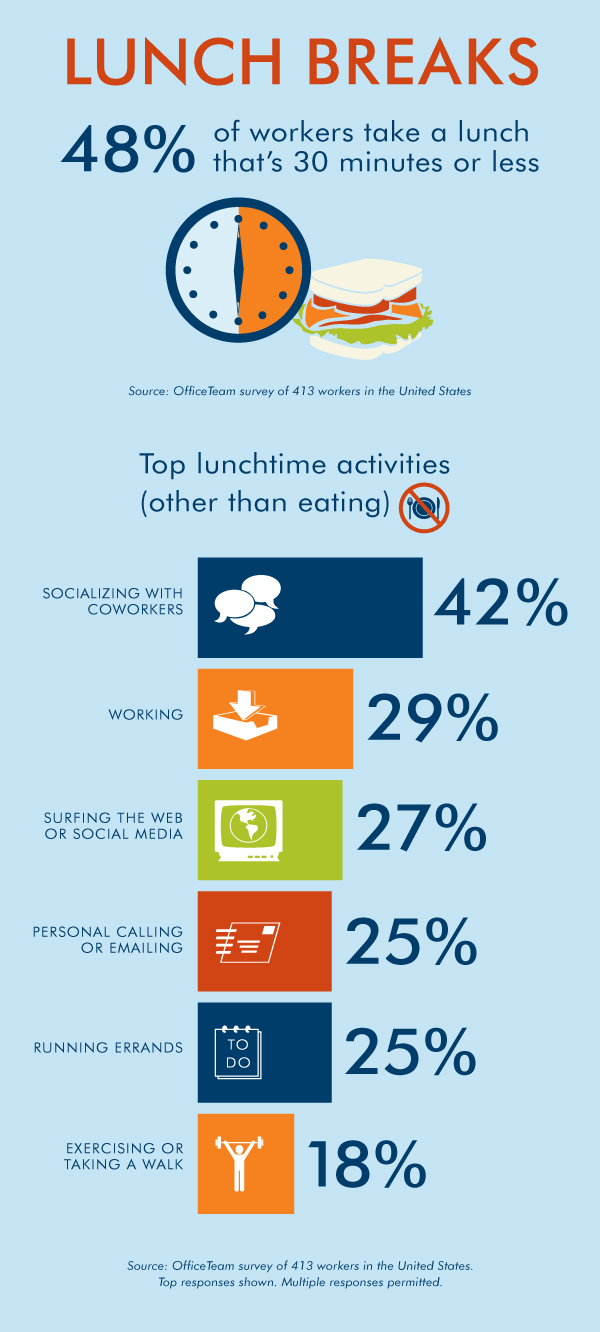
Image source: OfficeTeam
Why is this trend disturbing? Because taking a legitimate break in the middle of the day — one where employees leave their desks, stop working, and eat a wholesome meal — can make a potentially huge impact on their overall health and productivity. Studies continue to reveal that sitting all day can lead to a myriad of health problems and fatigue, and yet more and more of us aren’t even taking half an hour to get up and walk around a little bit.
As University of Toronto Organizational Behavior professor John Trougakos tells Entrepeneur points out, “Fatigue is related to decrements in efficiency, productivity, and accuracy of work… once [our psychological] energy source is depleted, we become less effective at everything we do.” Instead of boosting productivity by taking a real office lunch break, it seems that more of us are staying put in front of our computers.
Image source: flickr user katsommers
How can an office create a culture that values breaks? Here are a few key methods:
1) The boss has to take a break, too. Just like with employee wellness programs and other corporate culture initiatives, leadership has to come from the top. When nobody in management takes a lunch break, it might be sending a message to the rest of the staff that successful employees don’t take lunch breaks.
2) Invest in an inviting break room where employees actually want to congregate during the lunch hour — if they don’t feel comfortable, they’ll just stay at their desks.
Image source: flickr user deryckh
3) Make it a habit to offer catered lunches on busy days. When a deadline is looming or a big project is wrapping up, employees really may not have time to leave the office for a good meal. At the very least, discourage vending machine meals by providing a healthy, wholesome lunch — not only will staffers feel like their hard work is appreciated, but after eating a balanced meal, they’ll likely be more productive and less prone to burnout for the rest of the day.
4) Encourage socialization among employees during office lunch breaks. Companies like Google go for communal tables because they recognize that cross-departmental conversations can lead to innovation, and friendships at work can lead to increased job satisfaction. This is one area where the OfficeTeam survey is encouraging: 42% of workers do spend time socializing with coworkers on their lunch breaks.
5) If your office can’t afford regular catered lunches, plan a group food order for healthy takeout meals and invite employees to share their meal together in an empty conference room for a lunch-and-learn.
When it comes to creating a positive lunch break culture, you can count on the experts at Waiter.com! With easy online ordering, Virtual Cafeteria Service, and prompt delivery, no one in your office needs to skip a mid-day meal again.
Reinvent the Working Lunch: How Catered Meals Can Save Time & Stress in the Office
Last Updated on 2025-04-27 11:17 PM
When confronted with a lengthy to-do list and packed calendar at work, people often make a potentially disastrous choice: they’ll just work through lunch. Grabbing a quick “meal” from a vending machine or the closest fast-food chain and absent-mindedly shoveling it down while you work may seem like a time-saver, but most industrial-organizational psychologists (that is, psychologists specializing in the workplace) maintain that lunch breaks actually boost productivity.

The experts may agree, but Americans aren’t listening. According to some estimates, only one-third of American workers take a real lunch break most days of the week. The other two-thirds either eat at their desk, or even skip lunch altogether. But why is the typical working lunch bad for us? And how can we change the unhealthy habit without adding hours to the workday?
Psychologists like Chris Cunningham, professor of Industrial-Organizational and Occupational Health Psychology at the University of Tennessee at Chattanooga, warns that we all have a limited amount of psychological resources to draw from throughout the day. By remaining at our desks and working through lunch, we can drain that reserve. As Cunningham tells the Wall Street Journal, “Taking a lunch break away from the desk lets people separate themselves from the source of that drain. And that offers the opportunity to build back some of those resources in the middle of the day—rather than just at the end when work is over.”
Aside from psychological stresses, there are physical tolls to the habit of eating at your desk. A recent British poll found that workers who dine at their desks consume more than 1,200 calories at work each day — approximately two-thirds of the average recommended intake for women, and more than half for men. Participants who ate while working reported a higher tendency to dine on chips, snacks, and sodas rather than wholesome meals; of course, excessive calorie consumption can lead to obesity, which leads in turn to very costly declines in productivity.
The research is clear, but it’s hard to argue with employees who would rather save time and be able to leave the office at a decent hour than head out to a restaurant for a leisurely, and often expensive, lunch in the middle of the day. One possible solution is to provide an on-site lunch for employees.
A well-designed break room can become the office’s own personal restaurant for the lunch hour. Invite everyone to leave their desks behind and dine together, providing a break from their desks and the lively socialization that psychologists deem necessary for productivity and mental wellbeing in the office. Providing a catered lunch will not only bolster productivity, but employee satisfaction and their sense of appreciation.
With lunch delivery and customizable menu options from Waiter.com, it’s easy to honor employees’ personal tastes and preferences, and recurring online ordering makes it simple for busy administrative staff to manage the task of regularly accommodating a large group order. Providing a catered meal lets employees know their time is valuable, their contributions appreciated, and that their workplace culture encourages taking breaks and taking care of each other.
And, best of all, no one will have an excuse to eat chips for lunch!
Think Outside the Pizza Box: 5 Easy Ways to Up the Office Lunch Ante
Last Updated on 2025-04-27 11:08 PM
From Google’s famous cafeterias to startups’ weekly office happy hours, smart employers know that providing free food is a easy and highly welcomed perk in the workplace – and makes you look like a better boss. But when your employees come to expect a few boxes of pizza or the same Chinese takeout boxes every Friday, your staff lunches may be selling your message of appreciation short.
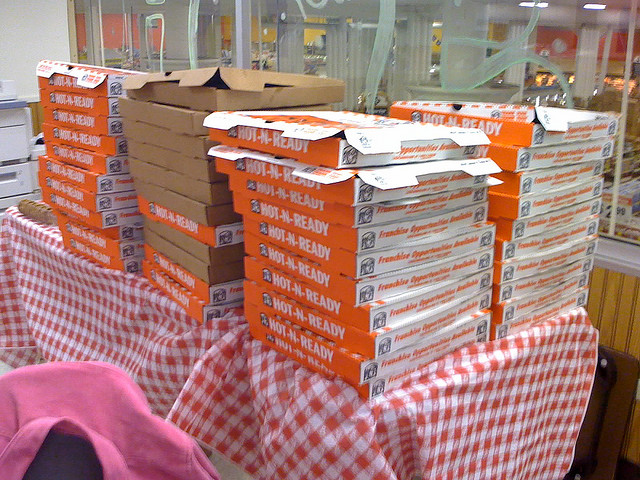
Image source: flickr user NathanHuth
Surveys show that “unexpected treats and rewards” like office meals or snacks are the second most popular form of employer appreciation (monetary bonuses ranked highest); however, don’t neglect the importance of the “unexpected” element. After all, treating your staff to a catered or delivered lunch isn’t just about sustenance; it’s about creating excitement and building social connections without ever leaving the office. There should be a buzz around the building when a surprise meal delivery shows up, and a feeling that something special is happening. When a few boxes of pizza show up every Friday, that excitement easily becomes muddled into part of the daily routine.
With the goal of creating a special occasion in mind, here are a few ways to think outside the pizza box during your next office lunch!
Host a traditional Indian buffet in the break room! This is easy to pull off and, for most offices, represents a big step outside the normal routine. Order a wide assortment of entrees and side dishes, and serve them family-style. Choose both easily approachable dishes like samosas and tandoori chicken, as well as some more unusual options, such as baingan bharta and rogan josh.
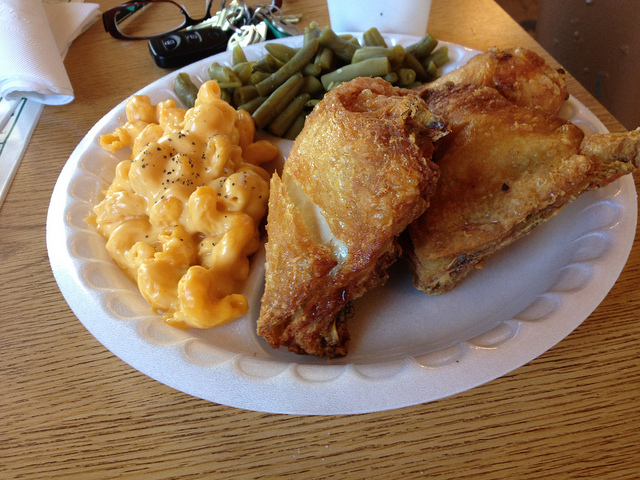
Image source: flickr user pam’s pics
If your employees are not particularly adventurous eaters, then go for a sure bet with a spread of Southern comfort food. Think big platters of barbecued pork, mac & cheese, collard greens, and a pecan pie for dessert. For most of us, this kind of meal is an indulgent treat… which is exactly what you’re going for.
You will really take your employees by surprise when you stage a dim sum brunch late in the morning instead of a traditional lunch! Sharing dim sum with a large group is a Cantonese tradition, and the food itself is composed of many individual servings of dishes like pork dumplings, egg rolls, and spare ribs. There are few meals more social, and a dim sum meal is the perfect opportunity to encourage cross-departmental conversation as employees try a plethora of new foods. Just make sure to order plenty: dim sum is addictive.
Image source: flickr user amesis
For a more festive occasion, stage an elaborate Hawaiian luau complete with grilled pork and shrimp, rice pilafs, papaya salad, and a pineapple upside-down cake for dessert. If you’d really like to make it a celebration, greet employees with leis and play Hawaiian music to foster a festive mood throughout the meal.
And finally, especially around Mardi Gras time, nothing will up the celebratory ante like a big table full of New Orleans cuisine. From chicken-andouille gumbo to jambalaya to muffalettas, there will certainly be an item for everyone on the buffet.
Essentially, as long as you keep the meal routine varied and unpredictable, you’ll achieve your goal of creating buzz and excitement around the office when it’s time for a workplace lunch! With online ordering and a huge selection from Waiter.com, it’s never been easier to keep your employees well-fed, feeling appreciated, and looking forward to the next office meal.
Admin Assistance: Order These 5 Tasty Sandwiches to Switch Up Your Business Lunches
Last Updated on 2025-04-27 10:59 PM
When busy administrative assistants are tasked with ordering business lunches or meals for meetings, it’s easy to fall into a comfortable routine: deli meats, turkey clubs, tuna salad. And while sandwiches are the perfect meeting food — crowd-pleasing and portable — these “classics” can quickly become ho-hum.
Make sure your clients or coworkers are actually looking forward to their lunch breaks during a busy day — after all, taking a genuine break is key to maintaining energy levels and productivity for the rest of the afternoon. Give business lunch attendees a meal that will break up the monotony of the day, and orchestrate a twist on the usual sandwich standards by ordering one of these unexpected options:
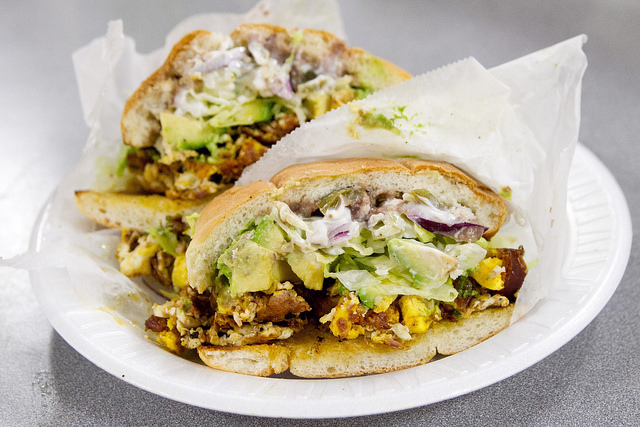
Image source: Flickr user Robyn Lee
Tortas
These mouthwatering Mexican sandwiches have never quite reached the popularity of tacos or burritos in the States, but they deserve to. Imagine taking your favorite taco fillings (charred meats, melty cheese, avocados, salsa) and stuffing them between a sliced, crusty roll, called a bolillo. Most Mexican restaurants will have a few tortas on their menus, including vegetarian varieties, which makes them perfect for big business lunches!
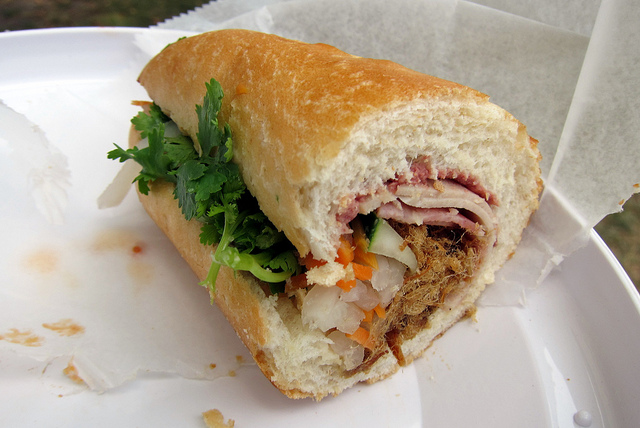
Image source: Flickr user Wally Gobetz
Banh mi
If you weren’t aware that French colonists exerted quite an influence on Vietnamese cuisine, you will be after tasting a delicious banh mi. In the most common variation of this unique sandwich, a crusty baguette is slathered with mayo and holds minced pork meatballs, sliced jalapeños, cilantro, and shredded carrots. Vietnamese restaurants and bakeries usually carry a few varieties, and even mainstream sandwich shops are jumping onto the banh mi bandwagon these days.
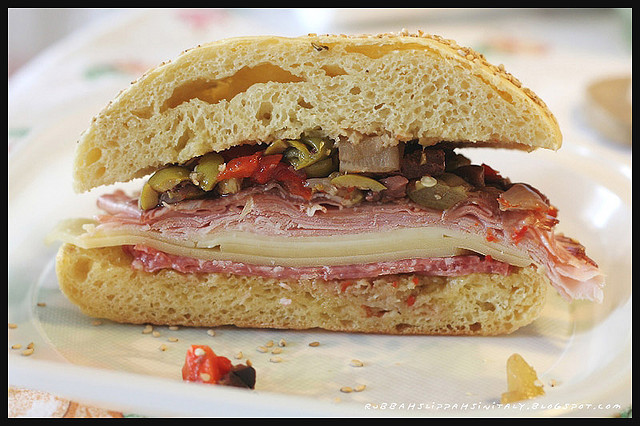
Image source: Flickr user Rowena
Muffuletta
Is New Orleans’ signature sandwich a muffuletta or an oyster po’ boy? It’s a toss-up, but when it comes to pleasing the crowd at business lunches, we’ll go with a muffuletta. A giant round of Sicilian bread, stuffed full of cured meats and cheeses that are topped with a lavish spread of spicy olive salad; cut into quarters, this is one sandwich that has earned its standing in New Orleans’ crowded culinary scene.
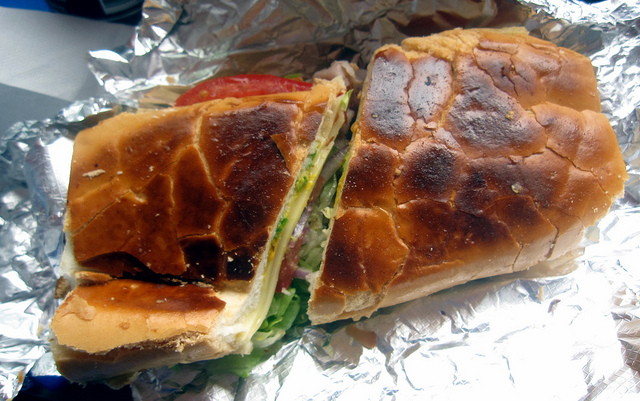
Image source: Flickr user Foodie Buddha
Cuban sandwiches
Possibly the world’s best variation of good old ham and cheese. Here, the cheese is Swiss, the ham is sliced (and occasionally supplemented with marinated pork), and both are topped with pickles and mustard… then, the whole thing is flattened by a hot press. The result is a gooey and delicious sandwich that puts cold cuts to shame, and can be found on many respectable menus far from Miami.
Image source: Flickr user Joey Rozier
Gyros
First of all, they’re pronounced “YEE-ros”. Secondly, they are not technically a sandwich, but since gyros involve meat that’s contained within bread and eaten by hand — and are delicious — we’re including them nonetheless! The traditional Greek gyro is roasted meat (usually made from ground lamb) served in a rolled pita along with tomato, onion, and tzatziki (a yogurt and cucumber sauce). Packed full of flavor and not too exotic to alienate picky eaters, gyros are a surefire way to spice up the lunch table — and easy to find, as they’re a staple on Greek restaurant menus.
Whatever you want to serve between two slices of bread, the food delivery experts at Waiter.com can make it happen. Business lunches, office meetings, and even overtime meals are made easy with online ordering and prompt delivery… so you have no excuse to settle for boring old deli sandwiches ever again!
Avoid the Afternoon Slump: The Top 5 Office Lunch Swaps You Can Make for All-Day Energy
Last Updated on 2025-04-27 10:49 PM
We all know the feeling: about an hour and a half after a filling, delicious catered office lunch, you start getting tired. Your concentration wanes, and even though you’re staring right at your work on your computer screen — no Facebook or anything! — you just aren’t getting anything done. Welcome to a well-known office phenomenon: the mid-afternoon energy slump.
What’s the culprit behind this all-too-common daily fatigue? It could be that you didn’t get enough sleep last night, or you’re dealing with stress. But it could also be something as simple as what was on your plate at lunch.

Image source: flickr user Lordcolus
All foods supply energy, but not in the same way. Foods that are high in simple carbohydrates, like white-flour bread or pasta, candy, and cookies, can give an instant boost to your energy levels, followed by a similarly quick crash, all because your body kicks into overdrive to digest them quickly. On the other hand, foods that are high in fat, such as a double-bacon cheeseburger with French fries, can leave you feeling drained because they take too much work to digest.
What should you be eating? Plenty of protein and complex carbohydrates (like those found in whole grains and starchy vegetables) that digest slowly over time, releasing a steady stream of energy.
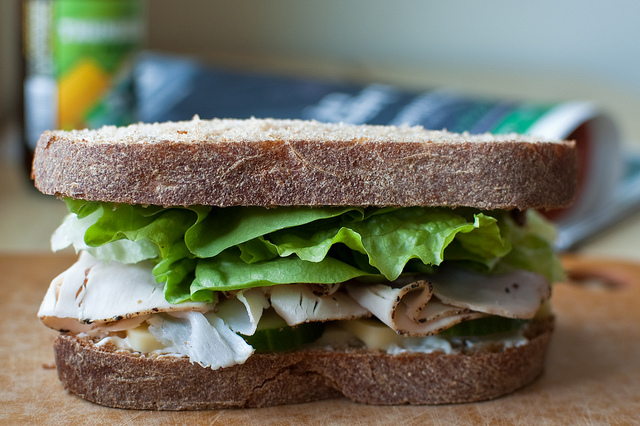
Image source: flickr user rainydayknitter
If you want to improve your energy levels at work, you don’t have to make a radical overhaul to your office lunch routine all at once (and research shows radical diet changes won’t last for most people, anyway). At work, lunch isn’t just a meal: it’s your break, and a time for you to relax and enjoy yourself. So don’t swear off your favorite deli or Chinese place, and only eat dressing-free salads with tasteless chicken breast. Instead, focus on making a few small, energy-boosting swaps to the meals you’re already eating. As you get accustomed to the changes (and notice the positive impact on your energy levels), then you can layer in even more healthy habits.
Before you know it, you’ll be bright-eyed through the afternoon — and sharing your energy-boosting secrets with your coworker who can’t stop nodding off in the afternoon meeting.
1) Lose the refined flour. Cutting back on those white-flour breads is definitely at the top of the priority list when it comes to increasing your afternoon energy. This might mean switching from sourdough to whole wheat bread at the deli, swapping white rice for brown at the Chinese place, or switching your burrito to a tortilla-less bowl.
2) Choose a significant side. By significant, we’re talking something with fiber or nutrients that will help sustain energy and fullness — not just empty calories. Instead of potato chips with your sandwich, opt for cottage cheese or nuts, both good sources of protein. Choose sweet potato fries instead of regular ones for more slowly-digested carbohydrates. And if you have pizza, get a hearty side salad instead of breadsticks.
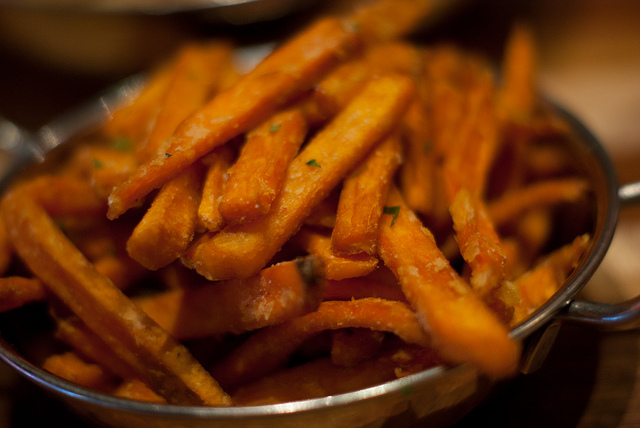
Image source: flickr user Nukelar Burrito
3) Cut out unnecessary fats. Not all fats are bad fats, but having too much fat at lunch will leave you instantly sluggish. Go for spring rolls instead of crispy egg rolls, choose leaner chicken instead of carnitas for your tacos, get mustard instead of mayo, and opt for grilled meat or shrimp instead of fried or “crispy” in any cuisine!
4) Choose dessert wisely. If you have a sweet tooth, don’t ignore it, but be smart about how you end your meal. Berries are one of the best energy-boosting foods, and pair nicely with a small piece of dark chocolate; switching to frozen Greek yogurt topped with fresh berries, a dessert loaded with protein and fiber, is even better!
Image source: flickr user ted_major
5) Cut out a quarter. Literally: take one-quarter of your office lunch and save it in the office fridge for an afternoon snack. Even when you eat a smart, balanced lunch, you can manage your energy levels best when you have a few healthy snacks throughout the day.
However you cut it, your office lunch has a direct impact on your energy levels and productivity throughout the workday. That’s why getting wholesome, healthy meals into the office is key — and Waiter.com is here to help. Use our easy online ordering or Virtual Cafeteria Service to ensure everyone in the office has the fuel they need to be at their best!
A Well-Balanced Lunch: Find the Perfect Bruschetta Recipe to Order for Food Delivery Today
Last Updated on 2015-01-02 02:10 PM
When you’re looking for new ways to create a balanced lunch that leaves you feeling full and powered up for the second half of your day, bruschetta is a delicious option. It’s an Italian favorite that’s commonly used as a dinnertime appetizer, but the combination of fresh tomatoes, garlic, basil, and balsamic makes it a really yummy lunchtime treat, too! With that being said, ordering a basic bruschetta recipe for lunch delivery every day – or even every week – might get a little boring. Lucky for you, there are a bunch of bruschetta alternatives that you will absolutely love to mix up this classic favorite. And we’ve compiled our favorites below!
Image Source: Flickr User Stefan Muth
Gorgonzola, Arugula, and Raisin
If you’re drooling just reading the name of this yummy entree, we don’t blame you: this take on traditional bruschetta is absolutely delicious. Gorgonzola cheese is mashed with mascarpone and loaded up on some crusty toast. It’s then topped with golden raisins and arugula, then drizzled with red wine vinegar. This is one of those meals that’s great for lunch, but you could also order for delivery in the afternoon to take to book club tonight – it’s even lovely reheated!
Rosemary and Cannellini Beans
For a protein-packed version of bruschetta, this is the perfect choice. Cannellini beans, also called Fagioli, are a traditional Tuscan ingredient that make their way into lots of traditional Italian dishes. To create an awesome flavor, the beans are mixed with some fresh onion, lemon juice, and garlic. Added into the mix is freshly chopped rosemary and parsley, then the combination is spread across some lightly toasted crostini. This meal makes for a delicious lunch all on it’s own and is sure to help you get productive this afternoon.
Yellow Tomato and Mozzarella
Traditionally, you think of bruschetta as being made with chopped ripe red tomatoes. This dish puts a twist on the old classic and instead uses yellow tomatoes, which have a slightly different taste – namely, yellow tomatoes are a little sweeter than their red counterparts. Fresh, cubed mozzarella is mixed in with the tomatoes, then diced basil completes the dish. It sounds incredibly simple, but it’s one of our favorite fresh lunches to order this month!
Ricotta, Kale, and Mushroom
If you’re looking for a superfood combo to top off your bruschetta, this is the dish for you. It’s also one of the fanciest bruschetta recipes on our list! Diced mushrooms are sauteed with garlic, then cooked with super healthy kale leaves and a chopped chile pepper. Seasoned Ricotta cheese is spread over toasted Italian bread, then topped with the mushroom and kale combo, creating a flavor explosion for your taste buds. Plus, kale is full of vitamins and nutrients that support brain development, stabilize your blood sugar, and help you feel fuller, longer. It’s the perfect way to pack some staying power into your lunch order today.
Packed with Flavor
One of our favorite things about ordering bruschetta for lunch – besides the fact that you typically get a heaping of veggies as part of your meal – is that it’s absolutely delicious. There’s not a single bruschetta recipe we’ve come across that hasn’t been completely delectable. And with all of the amazing restaurants Waiter.com connects you to for ordering lunch delivery, we’ve definitely got some options you’ll fall in love with. So if you’re looking for a foodie take on one of your favorite meals, make sure you’re checking out all the options we can bring straight to you for lunch today!
The Italian Lunch: Caprese Salad Meals Your Office Has to Try Today
Last Updated on 2014-12-26 03:25 PM
Here at Waiter.com, we love a good Caprese salad. The delicious taste combo of fresh mozzarella cheese, juicy tomatoes, basil and balsamic vinaigrette is enough to make us crave the same meal for days. Since this is usually better as a meal appetizer as opposed to a full lunchtime spread, you might be hesitant to order a Caprese salad as your whole midday meal delivery choice. But did you know there are a lot of ways you can order the flavor of this Italian favorite in a meal that’s a bit more filling? We love when restaurants bring the Caprese salad to their lunch options in unexpected ways. If your taste buds are tantalized, here are our four favorite lunchtime choices to get that delicious Caprese taste in a non-salad way!
Image source: Flickr user cherrylet
Caprese Flat Bread
We love flat bread as a healthy lunch choice, because it’s a great way to bring some whole grains into your meal without going the route of a full-blown pizza. Since whole grains can help you better sustain your energy over the course of the afternoon, it’s important to get a healthy balance between them and the protein, veggies and fruits you choose. The best part of the Caprese flat bread is that it’s easy to add some extra protein to your lunch in the form of grilled chicken or delicious Italian sausage. This is a perfect lunch choice to order for your midday meal today!
Caprese Soup
When you’re looking for the flavor of a Caprese salad, but want a meal that’s more filling – and perhaps extra delicious on a chilly day – choosing the Italian flavors of a Caprese salad in soup form is the perfect idea. And it’s really not anything too out of the ordinary – simply a creamy tomato basil soup that’s even better with the addition of a few balls of fresh mozzarella. And when you want to make this a more well-rounded meal, try ordering some fresh bruschetta on the side – it’ll make you feel like you just had lunch at a little cafe in Rome!
Caprese Sandwich
Another take on the flavors you love, a Caprese sandwich is a super delicious way to get a nutritional lunch. Fresh mozzarella, sliced tomatoes and basil are packed onto crusty Italian bread. Oftentimes, a pesto spread will be added to the sandwich, balancing out the acidic flavor of the delicious balsamic vinaigrette. Even better, this sandwich is yummy on its own, but also delicious when it’s grilled! And again, it’s a lunchtime choice that makes it super easy to add in some extra protein – sliced, grilled chicken or even a little prosciutto pair perfectly with this lunch delivery choice.
Caprese Pasta
Because the Caprese salad is so full of Italian flavor, it’s a no-brainer to order a yummy dish that infuses the tastes and textures you love with a traditional Italian grain. Again, this is a dish that will also have a little Pesto added in for extra flavor – creating a combination that you’re going to want to order again and again. To take the healthiness of this lunchtime meal up a notch, consider ordering yours with whole wheat pasta – or split this your tasty delivery meal with one of your work friends! It’s the perfect way to fill up with some healthy flavors over the noon hour.
Getting Out of the Box
When you have a delicious meal that you love, but are getting burnt out on ordering the same meal week after week, consider looking into unique ways you can get some of those same favorite flavors with a new meal choice. And when you want to explore all of the options that help you do just that, rely on Waiter.com to connect you with restaurants all over town offering fresh ingredients and delicious tastes you’re sure to love. Once you find a meal that sounds extra enticing, simply place your order on our site and we’ll deliver it straight to your office – we’re your one-stop lunchtime shop – and we strive to make your day as easy as possible!
Corporate Catering: How an In-Office Catered Lunch Can Be a More Productive Way to Work
Last Updated on 2014-12-04 01:40 PM
When you’re planning lunchtime meetings with clients, your immediate thought is likely to pick up the phone and make a reservation at a local hot spot with yummy food and a lovely atmosphere. But those lunches don’t typically make for great working lunches, and when you’re trying to accomplish a lot with a client (or even just a few colleagues), they’re probably not your best bet in terms of packing the most productivity into your day. But when it comes down to it, what are your options? Well, when you have access to a delicious catering service like Waiter.com, who will bring a delicious meal right to your office, you can easily keep your meetings in-house. Below, we’ll detail exactly why this is an ideal setup for you and your client – and how to do it best.
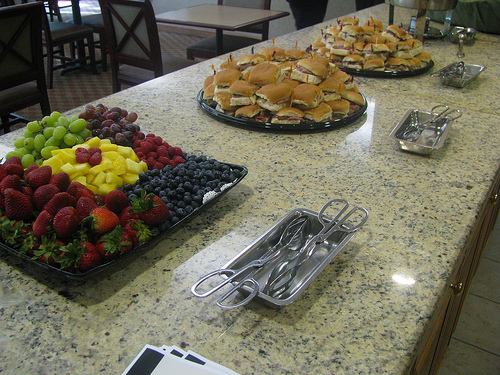
Image source: Flickr user Calvert Cafe & Catering
Making Meetings Work
There are a lot of meetings where an external sit-down at a neutral location – whether for good or not so good reasons – makes sense. But when you’re trying to accomplish quite a bit with a client over the lunch hour, bringing the food to you just makes sense. Everything you need, including computers and a secure internet connection, are available at your fingertips. The research you’ve already done is easy to access. If you need to pull a colleague in for quick feedback, you don’t have to step away and ‘get back’ to someone. Essentially, the ease of having everything you need to accomplish great things is readily available, which immediately makes your meeting more productive.
And since people tend to work better when they’re well-fed, bringing in a catered lunch will ensure that everyone’s satisfied and ready to stay on task. However, when you’re bringing a client to the office, you don’t want to just order in food from a random restaurant; you want to show them that you planned for the meeting and you value the time they took to come to your office to make the meeting work. This means it’s in your best interest to find the right corporate catering option to really impress your client.
Building the Catered Lunch Menu
As you’re building the menu for your lunch meeting, ask your client if anyone joining has any dietary restrictions or preferences. This will help to create some catering options that everyone at the table will love. Next, think about the foods that offer the most benefits, especially in terms of boosting productivity. For example, lean meats or fish can be a great way to add in protein for energy, without packing on a ton of calories. A salad with a spinach base can offer brain-boosting nutrients, plus fiber to aid in digestion. Packing on fresh veggies and seasonal fruits can also be a tasty way to add more vitamins and antioxidants to your meal.
Finally, make sure to include some yummy whole grain carbohydrates to sustain your energy over the afternoon, like seven-grain rolls or a tasty sandwich that includes ingredients from all of the food groups. No matter what you settle on for the menu, choosing a balanced meal will help you to ensure everyone’s happy and energized to accomplish everything on your list during the meeting.
Set Up Your Space
Don’t forget that when it comes to a successful business meeting, your ambiance will be important as well. Make sure you secure a room in your building in advance that offers a quiet space for collaboration, ensuring that you can get your work done. Also, be sure to choose a space that comfortably seats everyone who will be joining your meeting, and presents an easy spot in which to serve and enjoy your lunchtime meals. Many offices now have meeting spaces that offer refrigerated refreshments, along with technology to easily contact anyone who can’t physically make it to your meeting time. If these are requirements for your lunchtime collaboration, make sure you book a room that can accommodate all of your needs.
As you’re planning your next lunchtime working meeting, Waiter.com is the perfect partner to fill your corporate catering needs. Not only can we supply delicious and nutritious food options, our meals are just as tasty as the restaurant down the street. Planning a productive working meeting has never been easier, or more delectable, than it is today!
Perfect Paella: Bring Some Spanish Flavor into Your Workday
Last Updated on 2014-11-17 10:48 AM
Paella is a delicious rice, vegetable and meat dish that originated in Valencia, Spain, during the days that the Moorish Kings were in power. According to legend, it’s a dish that melds two different old cultures: the Romans – who made the special pan within which paella is cooked, and the Arabs – who brought flavorful rice to the table. After royal banquets, servants would mix leftovers in large pots to take home, constituting early versions of this now-famous dish. The recipe was eventually refined and spread throughout the entire country, which created a huge explosion of paella dishes that include a variety of meats, veggies, and flavors that we call get to enjoy today!
There are two reasons why paella makes a great lunchtime meal delivery option for you: first, it’s a naturally balanced meal between the rice, meat, and vegetables that are mixed into the dish. A well-balanced lunch means you’ll get the right combination of food groups to feel full and sated, and be better able to sustain your productivity throughout the rest of your day. Second, the flavor is amazing – and since there are so many different options for how this particular meal can be made, you’ll never feel like you’re getting the same humdrum meal two weeks in a row. Intrigued? Let us tempt your tastebuds – here are three of our favorite Spanish paella dishes you could order in for your office meals today!
Photo Source: Flickr user fred_v
Traditional Paella
As it’s been made for centuries, traditional paella includes a few types of seafood, usually shrimp and mussels, in combination with one or two ‘land meats,’ like chicken and spicy sausage. While they’re not flavors you would usually think of mixing, there’s something totally perfect about how these proteins blend with the rice and veggies in this meal. Finely chopped veggies are then added to the dish, usually in the form of red bell peppers, diced tomatoes, and peas. Then some of the beautiful flavors of Spain, saffron and paprika, are mixed into the dish. Because paella is cooked in one big pan, the flavors infuse the entire meal with something unique and totally tasty. We definitely recommend adding this dish to your list of lunch delivery items to try this week!
Grilled Paella
This yummy dish infuses a smoky flavor with some of the traditional flavors of Spain. Shrimp, chicken, clams, and Spanish chorizo bring a yummy combination of meats (and protein, for energy) into the dish. Mixed with traditional Spanish paella rice, chopped tomatoes, and onions, the main ingredients of this lunch meld together perfectly. Seasoned with saffron, a traditional way to take the flavors of a paella dish up a notch, this plate is then topped with a little squeezed lemon – which adds something modern into the mix. When you’re craving barbecue, but are ready to try something different than a burger or chicken sandwich, this is a more refined meal choice to order for office delivery today!
Mushroom Paella
When it comes to eating paella in the winter months, sometimes swapping a few ingredients can do just the trick. In the case of this dish, using mushrooms to compliment the traditional red peppers used in the original version is the perfect way to bring a little heavier taste – and texture – to the meal. Mushrooms are definitely a strong feature; the mixture of flavors from the shiitake and oyster varietals in bulk really pack more mass into your meal. Not only that, but mushrooms are an excellent way to help your body digest food and boost your immune system – taking this dish up a notch to terms of the health benefits it provides. This midday meal also mixes in chicken and shrimp, as well as some Italian parsley and cloves to change up the flavor a bit. It’s one of our favorite takes on a very old favorite dish!
Lunchtime Flavor Swaps
When it comes to changing up the flavor of your favorite lunchtime meals, paella is definitely a tasty treat that you should considering ordering for delivery today. The seaside taste mixed with the flavorful spices of Spain will leave you ready to book a trip to walk the streets of Valencia. You might even be intrigued to make a batch of fresh sangria over the weekend!
When you’re ready to try some of the unique flavors Spanish paella has to offer, Waiter.com is here to help. Our easy to use meal delivery service allows you to order from your favorite restaurants around the city, and have your food delivered straight to your office. Planning a bigger affair? Our corporate catering can make a yummy paella dish your team is sure to love for any big event. Learn more about how we can help you make your next big meeting one to remember!
Skip the Chips and Fries: 7 Healthy Sides That Pack a Powerful Punch for Your Lunch Order
Last Updated on 2014-10-08 10:51 AM
We get it: ordering the traditional food delivery sides like chips and french fries is an easy way to round out your midday meal. But since they’re typically fried in oil, you’ll often find yourself feeling pretty greasy — and hungry — by the middle of the afternoon. That’s because chips and french fries are packed with empty calories. Thus, they don’t have the staying power you need to make it through the rest of your day without additional snacks.
Choosing healthier options that contain more fiber and vitamins — like veggies — can help you to eliminate that afternoon slump, be more productive for the second half of your day and combat the afternoon munchies. Not only that, choosing healthier food options can help boost your immune system, reducing your risk of catching common illnesses like a cold or the flu. And this means you can use your days off for the things you really want to do — like taking that fantastic beach vacation this winter.
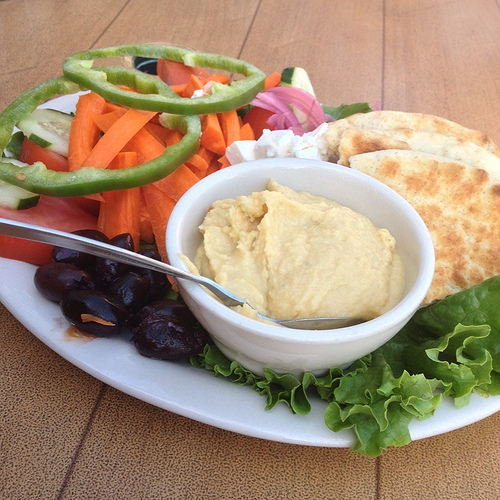
Image source: Flickr user Don Nunn
To help you find great tasty options that pack a healthful punch, we’ve pulled together some of our favorite healthy sides that will keep your mind refreshed and your taste buds happy.
Wedge Salad: This classic steakhouse favorite is a great way to round out your main dish at lunch. The big wedge of iceberg lettuce is filling in itself, but it’s the protein that gives this side some staying power. A wedge salad is typically topped with bacon bits – a nice treat in moderation – and sliced boiled eggs. Add in some chopped tomatoes – which are packed with potassium and vitamin C, can help control your blood pressure and boost your immune system, and you have the makings of the perfect side dish. Cheers!
Veggies and Hummus: We all know to pack lots of veggies into our day — but sometimes, vegetables on their own can get a little boring. By adding hummus to dip your veggies into, you can do more than just mix up the flavor of your meal and boost the health value of your lunch. Hummus is packed with protein (it’s made from chickpeas, after all), which means it can help you fight hunger cravings long into the afternoon and better control your weight. Now that’s a side with some staying power!
Quinoa Salad: Although it’s been gaining popularity over the last few years, quinoa still isn’t a completely mainstream side order. If you’re wondering what it is, quinoa is essentially a seed that is eaten like a grain. Recently, quinoa reached superfood status because it’s packed with protein, fiber and other nutrients like manganese, iron and potassium. Quinoa salads usually take a health-filled lunch to the next level: they’re packed with yummy veggies like cherry tomatoes, cucumbers and onions and can even include some light cheese, like a nice Feta to compliment all of the other flavors. Plus, it’s a great way to mix up some of the flavors you typically get with your typical midday meal. It’s definitely a side to try.
Fruit and Greek Yogurt Parfait: If you’re craving something sweet to top off your meal — but want to get away from the sugar packed desserts — order a simple fruit and Greek yogurt parfait. Although it’s typically a breakfast item, many restaurants will still offer it during lunch. Greek yogurt is full of protein and dairy, which can help you manage your weight. It’s also great for improving your digestive health due to the probiotics naturally found in the yogurt. And adding fruit is a lovely way to end your meal with something sweet while not sacrificing your dietary goals for the day. It’s the perfect way to feel satisfied until dinner.
Simple Edamame: Edamame is one of our favorite sides. Because it’s a simple dish that’s delicious, you’ll always be ready to order it again. Just one half-cup serving of these steamed soybeans doles out a whopping 9 grams of fiber and 11 grams of protein at just 120 calories. The lightly salted taste is excellent for satisfying your lunchtime craving — and soy protein is thought to help reduce cholesterol and protect against certain types of cancer, heart disease and osteoporosis. Not only is edamame completely delicious, it can be a regular part of your healthy lifestyle!
Healthy options for busy days
When your day is swamped, it can be easy to give in to cravings for fat and sodium packed sides that don’t have the right nutrients to keep you full and productive for the rest of your day. Choosing a healthier option can not only help you keep your diet on track, but accomplish more during the day and promote a healthier lifestyle in general.
When you’re ready to order a great lunch — complete with a healthy side like those we showcased above — Waiter.com is here for you. Our easy-to-use service will deliver your favorite meals right to your office — making healthy living a little easier to come by.
6 Protein-Rich Food Delivery Orders to Refuel After a Lunch Hour Workout
Last Updated on 2014-07-29 02:38 PM
Americans tend to be bad at taking breaks. We let our vacation time go to waste, use our smartphones in bed, and of course, are notoriously awful about actually relaxing on our lunch breaks. We just order up our go-to food delivery and might never even leave our desks.
And believe it or not, some experts are actually starting to propose that skipping your lunch break might not be such a bad thing… only instead of staying glued to your computer, they suggest you head to the gym.
Lunch hour workouts are, in fact, a growing trend, partly thanks to the workplace wellness programs that are taking off in popularity as the Affordable Care Act continues to incentivize employers’ focus on preventative health. And it really can be a brilliant idea: you’ll get a mental break from the daily grind, and even if it’s only 30 minutes, that exercise can make a big difference in your health and energy levels.
OK, but what about actually eating? That’s where food delivery can be a lifesaver: arrange for a post-workout lunch to be waiting for you at the office, and you can eat when you get back to your desk. While you don’t want to squander the positive benefits of working out (like weight loss and boosted energy levels) by downing a monster burrito or greasy burger, it is crucial to eat healthy, protein-rich food to replenish your muscles and get the biggest bang for your workout buck.
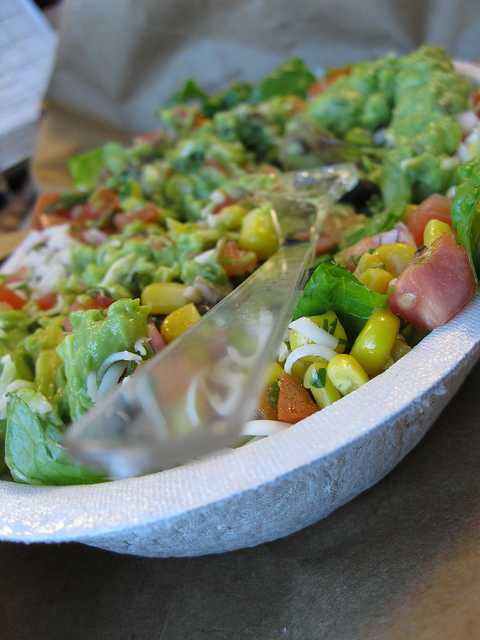
Image source: Flickr user corruptkitten
We’ve rounded up a few ideas for post-workout office lunches — complete with the complex carbs, plenty of protein, and vitamin-rich vegetables your body craves after a run or weight-lifting session. If you think takeout can’t be a key part of your healthy lifestyle, think again.
Chinese
If you’re craving Chinese food, choose beef with broccoli and brown rice. You’ll get more than enough protein (ordered from PF Chang’s, this dish packs in 56 grams), along with a ton of tissue-repairing vitamin C from the broccoli and complex carbohydrates from the brown rice.
Mexican
If everyone else is ordering Mexican takeout, pile a burrito bowl with brown rice, black beans, chicken, fresh salsa, and guacamole… and don’t be afraid to eat only half. Too much food after a workout can be detrimental to your health goals, and we all know those burrito bowls don’t exactly follow the recommended portion-size guidelines!
Sushi
If you’re ordering from the sushi place, pick a roll with salmon and brown rice (and without the mayo-laden “spicy” sauce), along with a side of edamame for an extremely healthy meal rich in protein, inflammation-fighting omega-3 fatty acids, and complex carbs.
Thai
When it comes to Thai takeout, choose cashew chicken — between the stir-fried chicken and the nuts, you’ll be swimming in protein and healthy fats. Pair it with som tam, a spicy green papaya salad, to make sure you’re getting enough vitamins and minerals from some fresh veggies.
Indian
Choose Indian food for a lunch that’s essentially pure protein: order a few kebabs of tandoori chicken with raita, a yogurt dipping sauce… and add in a side of dal (curried lentils) for even more protein and fiber.
Deli/sandwich shop
When you’re ordering from the deli, any lean meat on whole-wheat bread is a winner, but kick your workout recovery up a notch by choosing tuna over turkey for a dose of omega-3’s.
Whatever flavor you’re craving, if you’re a lunch-hour workout warrior, you’ve simply got to make sure you’re fueling up after the fact! Set up a recurring food delivery order with Waiter.com, and you won’t have to lift a finger (after lifting weights) to make sure a healthy, protein-rich post-workout lunch is waiting for your return.
The 5 Greatest Apps for Improving Office Meals – From Calorie Counts to Sustainable Seafood
Last Updated on 2014-07-08 03:04 PM
We all know the story: when you’re out with friends and want to find the nearest sports bar/cocktail lounge/late-night burrito spot, everyone reaches right for their phones. Someone checks Yelp, the bargain-hunter opens Savored, another pulls up Urbanspoon, the big spender looks up reviews on Zagat… everyone in our tech-savvy generation has their go-to restaurant app ready at a moment’s notice. Especially for those of us who fall in the Millenial generation, technology is the default tool when it comes to finding the perfect spot for dinner or drinks. But what about when it comes to eating even halfway decent office meals?
Image source: Flickr user missmeng
If you’re stuck in a morning meeting that’s running long, and your stomach starts to growl, and your only window to have an actual lunch is quickly shrinking, finding a healthy, delicious, fresh meal might be a laughable thought. If you have time to wolf down a package of nuts from the vending machine (and maybe a half-stale donut from the break room), you’ll consider yourself lucky. It doesn’t have to be this way! Just like you take the time to pick out the ideal stop along the pub crawl, you can take advantage of a handful of apps to ensure your office meals are actually meals, and not a patchwork of less-than-wholesome snacks. And since everyone is checking their smartphone during meetings anyway, no one will be the wiser that you’re ordering lunch instead of taking notes! These five apps can help make your lunch hour the opportunity to relax and recharge that you deserve!
1) If you want to make sure you’re ordering healthy takeout, Restaurant Nutrition is a must-download. It charts the nutrition info for more than 60,000 items at over 250 chain restaurants, so you can check the stats on that quesadilla salad before you accidentally eat a whole day’s worth of saturated fat in one sitting.
2) Sushi seems like a no-brainer for a quick and healthy lunch — but some restaurants serve seafood that may be endangered or hard on the environment, like bluefin tuna or farmed Atlantic salmon. If you want to make sure your lunch order isn’t cause for concern, use the Monterery Bay Aquarium’s Seafood Watch app: not only does it tell you if your chosen fish is “ocean-friendly,” but it offers a list of alternatives to make changing your order easier.
3) Addicted to food images on Instagram? Then you have to check out Foodspotting. It’s all food photos, all the time, and you can browse by location and type of cuisine to see a real-life image of the kung pao chicken at the neighborhood Chinese place before you order it. And remember, if anyone gives you a hard time about snapping photos before you eat, tell them you’re just engaging mindfully with your food.
4) It may not come in quite as handy at lunchtime, but bonus points go to web-based Vinepair for combining two of life’s great pleasures: takeout and wine. The interactive mix-and-match tool lets you know that you should pair your curry with Syrah, barbecue with Malbec, or Thai with Gewurtztraminer. Just a quick stop at the wine shop on the way home, and you can feel downright fancy about eating your leftover takeout for dinner!
5) Of course, we may be biased, but nothing makes ordering office meals easier than our own Waiter.com app! When you need to be discreet in a meeting or order your delivery while you run out to pick up the drycleaning, use your smartphone to access the same selection of menus and food delivery service that we offer on the web. We make ordering on the go (or the down-low) easy — so you can kiss that vending machine “lunch” good-bye!
10 Sneaky Ways to Eat More Vegetables During Office Meals – and Get Closer to 9 Servings Per Day!
Last Updated on 2014-06-16 10:49 AM
How many fruits and vegetables do you eat every day? How many do you think you should be eating? Maybe an apple at breakfast, a side salad at lunch, and an ear of corn off the grill at dinner?
Think again. The latest recommendations from the USDA suggest that the average American adult should be eating nine servings of fruits and veggies daily, with an emphasis on the vegetables. Approximately, that means two cups of fruit, and two and a half cups of vegetables.
Image source: flickr user Rick Ligthelm
If your current routine leaves you falling short (especially if you don’t count white potatoes, which many nutrition experts say you shouldn’t), you aren’t alone. Research suggests that many Americans are only eating three servings of fruits & vegetables every day — a third of the recommendation. And this means that most of us are actively saying “no thanks” to a healthy habit that would almost certainly reduce our risk for weight gain, cardiovascular disease, high blood pressure, and cancer.
Vegetables, for some reason, seem trickier than fruit to most of us — maybe because fruit is sweet and easy to eat all on its own, and vegetables typically aren’t. Snacking on apple slices or fresh berries is a lot more appealing than eating a dish of raw broccoli. The good news is that you don’t have to become a vegan or eat a bucket of kale every day to up your vegetable intake — and even at the office, you don’t really have to change your routine or ditch your favorite food delivery order at all!
One way to build a nine-servings-per-day habit is to simply always be on the lookout for ways to add vegetables to whatever office meals you’re already eating. If you decide to make more drastic changes (like observing Meatless Monday or cutting back on sugar), that’s awesome… but don’t let inconvenience hold you back from eating more fruits and vegetables right now.
Need a little inspiration to get your vegetable habit kick-started? Here are ten easy ways to sneak more veggies into your office meals:
1) Add veggies to your morning omelette (spinach & tomatoes are excellent options) at a catered breakfast meeting
2) Instead of cream cheese, spread a healthy dose of hummus on your bagel: chickpeas are a great source of fiber
Image source: Flickr user Lara604
3) Order your lunchtime pizza with extra veggies (bell peppers are an excellent choice), and if you really want to go crazy, half the usual amount of pepperoni or sausage too
4) Order sweet potato fries instead of regular from the diner — while fries still aren’t the best choice, you’ll at least get a nice dose of the antioxidant beta-carotene
5) Add a cup of minestrone soup or vegetarian chili to your lunch order — as a bonus, it may help you consume fewer calories during the rest of your meal
6) Instead of sour cream, get guacamole on your burrito (yes, avocado is technically a fruit, but still packs a lot of vitamin C and heart-healthy monounsaturated fats)
7) At the Chinese place, ask for extra veggies in your favorite stir-fry or more broccoli in your beef-and-broccoli — and eat a little less rice to make room
8) Add an order of edamame next time you have sushi delivered to the office
9) Try an eggplant curry from your favorite Indian takeout place — you’ll be shocked at how little you miss the meat!
Image source: Flickr user pelican
10) When you order a deli sandwich, add a few extra veggies like spinach or sliced bell peppers (iceberg lettuce is kind of a nutritional throwaway, so don’t waste your time there!)
The easiest way to eat more vegetables is to try new ones — if you automatically think of broccoli and spinach, you might just need to broaden your horizons. Whether it’s eggplant in your curry or beans in your chili, there are so many ways to sneak a few extra servings into your office meals! And ordering with Waiter.com makes the facing challenge even easier. What’s holding you back from getting your nine-a-day?
Food Delivery Makeover: How to Order Restaurant Salads that Are Actually Good for You (and Which Ones to Avoid Entirely)
Last Updated on 2014-06-12 12:35 PM
When you order takeout or food delivery for a working lunch, picking a salad off the menu often feels like the easiest way to eat healthy at the office. But many, many restaurants make their salads more mass-appealing by adding less-than-low-cal ingredients… and after a little bacon and a lot of cheese, that “healthy” salad ends up being just as packed with fat, salt, and calories as a triple-decker club or even a burger.
Sadly, several of the most popular restaurant salads often fall right into that category. To help keep your food delivery orders on track, here’s our take on which salads should be skipped, which can be salvaged, and how to make it happen:
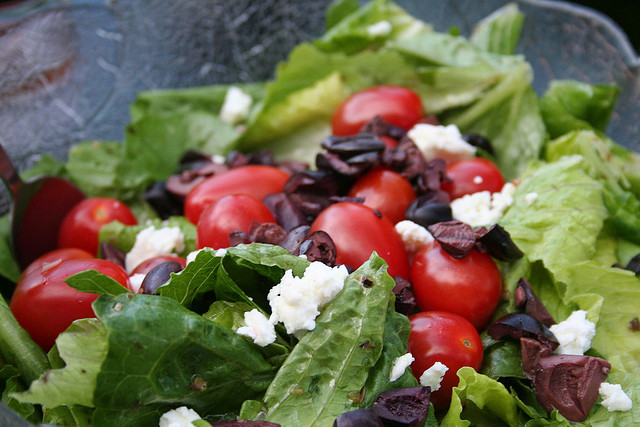
Image source: Flickr user leigh wolf
Greek salad
Tomatoes, bell peppers, cucumbers, olives: there’s a lot to like about a good Greek salad, which is traditionally packed with vitamin and antioxidant-rich vegetables. Make sure your restaurant order stays healthy by ordering a traditional vinaigrette on the side, instead of a creamy “Greek” dressing poured over the top. And if you’re watching your calorie intake, ask for just half of the usual feta cheese (with flavorful cheeses like feta, a little goes a long way).
Wedge salad
Crisp iceberg lettuce, savory bacon, creamy blue cheese, sweet tomatoes — the wedge salad hits all the right notes when it comes to taste and texture. Unfortunately, it misses the mark on nutrition. Iceberg lettuce makes for about the least nutritious salad green out there, and the calorie-laden toppings load this salad with excess fat and salt. At one nationwide chain, you’ll consume 59 grams of fat and 600 calories when you order the wedge — and it’s classified as a side salad. Consider this a very occasional treat, not a healthy everyday lunch.
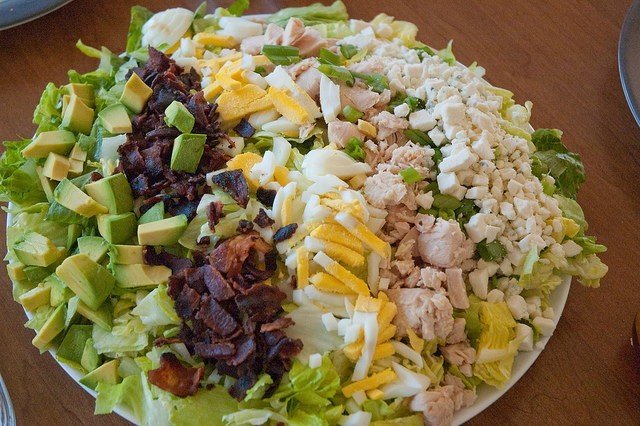
Image source: Flickr user jodimichelle
Cobb salad
There’s no doubt that this is a hearty salad, with grilled chicken, hardboiled egg, bacon, blue cheese, and, oh yeah, some vegetables underneath. While the calories and fat grams can add up with all that bacon and blue cheese, it is possible to modify your way to a healthy Cobb salad: swap in heart-healthier avocado for bacon, and again, ask for just half the amount of blue cheese. With a vinaigrette dressing, it will be a very satisfying and fairly healthy lunch with plenty of protein and vitamins… just be careful not to overeat when you order a gigantic restaurant portion.
Caesar salad
This classic has a few nutrient-packed positives: romaine lettuce is a great source of vitamins A and K, and anchovies are packed with omega-3 fatty acids (although many chain restaurant varieties leave out the traditional chopped fish). However, those are drowned out — literally — by a sea of creamy dressing, Parmesan cheese, and crunchy croutons. At one Southwestern chain, a chicken Caesar salad has 44 grams of fat… almost as much as a lunch order of their signature baby-back ribs. Given the simplicity of the ingredients, it’s hard to make substitutions without ruining the salad completely… so you’re better off skipping Caesar altogether.
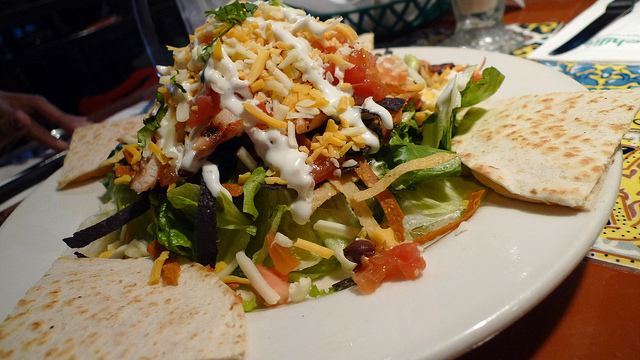
Image source: Flickr user tisay
Southwestern chicken salad
Shredded romaine piled with chicken, black beans, corn, peppers, and tortilla strips: we all know this ubiquitous restaurant salad, although it goes by many names (yes, the counterintuitive “quesadilla salad” being one of them). And it’s this-close to being an awesome lunch choice, since it has all the hallmarks of a satisfying salad (fiber from beans, protein from chicken, and vitamins/minerals from the greens and veggies)… but when it’s piled with crispy tortillas, breaded chicken, and a creamy ranch dressing, it becomes another fat-and-calorie bomb. Luckily, by ordering grilled chicken, a vinaigrette-style dressing, and skipping the tortilla strips, you’ll end up with a very well-balanced salad.
There’s a pattern here to making sure your restaurant salad is a healthy one: choose grilled instead of fried when it comes to your protein (whether chicken or shrimp), ask for a vinaigrette dressing instead of a creamy one, and hold the empty-calorie extras like croutons or tortilla strips. And if you can’t do without a little indulgence in your salad, just choose one: pick bacon OR blue cheese, not both. You’ll still be way better off than if you’d gone right for the burger or burrito, while still enjoying a flavorful and satisfying lunch.
Choosing the right salad is much simpler when you have plenty of restaurant menus at your disposal… just one of the reasons why Waiter.com is your greatest ally when it comes to ordering healthy food delivery!
Take a Page from Bitly: Why Your Office Should Add Lunch and Learns to the Weekly Routine
Last Updated on 2014-04-14 10:55 AM
Looking for a way to increase engagement, build relationships, and keep your employees well-fed and happy? Take a lesson from Bitly and consider implementing a regular “lunch and learn” for the entire office.

Image source: flickr user Tarnie
Bitly recently used their company blog to describe their weekly lunch and learn routine: “Every Wednesday, all of us (regardless of team, meetings, or schedule that day) will sit together over lunch to learn about —anything!” While the company is best known for something relatively simple (a link-shortening service), it’s clear that they have put a lot of thought and effort into the complex task of building a positive corporate culture.
On the surface, lunch and learns are nothing new. The midday meetings have been around for quite a while, and they have been criticized for being a waste of time — especially when the “learning” portion is actually a sales pitch in disguise. That’s why we love Bitly’s twist on the old formula: “One person presents about a subject they’re interested in, a cause they care about, or a side project they’re working on while the rest of us listen and learn over a catered lunch from a nearby restaurant.” At Bitly, it isn’t just a manager or outside “expert” coming in to lecture a staff. A different member from within their own team shares their passion with their coworkers, regardless of how it’s connected to the actual work of the office.
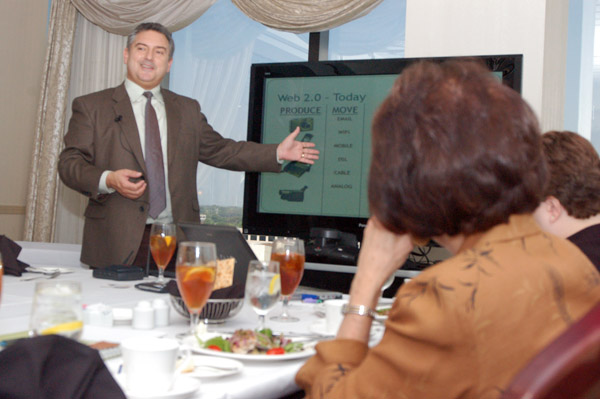
Image source: flickr user LunaWeb
This eclectic approach keeps the lunch and learn from feeling like just another meeting — one that employees have to give up their lunch break to attend! The practice of taking time out from busy schedules to learn about each other provides a real break in the workday while building a sense of teamwork and camaraderie in the office. Bitly’s approach of employee-led lunches gives employees a chance to get to know one another in a genuine way and sharpen public speaking skills. As an added bonus, bringing staff members from different teams and departments together is often a fantastic way to spark innovation, and could potentially create lasting connections that may not have been forged in the daily flow of office life.
Lunch and learn topics can be as varied and diverse as your employees themselves. Bitly’s previous topic list includes subjects ranging from how to build an award-winning app to customer communication to Pictionary showdowns! Incorporating interactive activities, games, or a Q&A portion into each lunch and learn can help keep all the attendees engaged. Keep in mind that it’s important to keep the atmosphere casual and fun: this is your employees’ lunch break, after all, and should be a time to relax and recharge for the rest of the day.
Image source: flickr user Shreveport-Bossier: Louisiana’s Other Side
And of course, employees always appreciate a good office lunch! Providing a quality catered meal sends the message that the company believes the lunch and learn is a worthy investment of resources. Waiter.com makes it easy to manage meal planning and maintain a regular lunch delivery schedule, preventing a weekly lunch and learn from becoming a burden on the office manager or administrator in charge of the “lunch” portion of the meeting.
Need more convincing that a lunch and learn is worth your time? Three words: Martha does it.
Catered Lunches to Surprise Sundaes: How to Feed an Accounting Team During Busy Season
Last Updated on 2014-04-14 10:09 AM
It’s busy season. If you work for an accounting firm, or are married to an accountant, or are friends with an accountant, you know what “busy season” means. It means working early in the morning, through the lunch hour, into the evening, and on Saturdays (and possibly Sundays). Busy season, which begins in January and runs up to the April 15 federal deadline for tax filings, means work. Lots of work.
Of course, a tax firm office full of employees working long hours (and potentially spending more time with their colleagues than their spouses) can also mean stress and burnout. As John Shank of Birmingham-based accounting firm Barfield, Murphy, Shank, & Smith tells Business Alabama, “So much work is compressed into such a short amount of time, and stress with employees is inevitable.”

Luckily, as the accounting industry has come to terms with the reality of busy season, they’ve also found strategies to offset the stress and tension. In-office massages, group Wii tournaments, acupuncture treatments, and gift certificate giveaways are all popular methods of providing relief from the daily (and nightly) grind.
But most important of all the busy-season coping strategies? Food. As administrative assistants in accounting firms can attest, busy season means food! From staff lunches to late-night dinners, keeping hardworking accountants fed and energized is key to a successful busy season.
In fact, when AccountingToday.com polled LinkedIn’s Accounting group on their favored busy season activities, the most popular perk was free meals. The article reports that “Free team lunches and dinners ranked highest… but our favorite culinary response came from trainee Rebecca Granthan: ‘An unexpected round of bacon sandwiches at 10 am :-).’”
Indeed, while stocking the break room with box lunches, soda, and healthy snacks will get the job done, smart accounting firms know that there’s a strategy to treating their team to busy season meals. Provide accountants food when they need it most, and when they expect it the least… and make eating a team-building exercise.
When it’s late on Thursday afternoon and everyone realizes they’ll be working until 10 pm, that’s the perfect time to order up a round of pizzas or Chinese takeout to keep everyone well-fed and able to focus for a few more hours. On Saturdays, when the office will be full of employees who might be missing out on their kids’ dance recitals or soccer games, treat them to a fully-catered lunch to communicate an extra dose of appreciation and teamwork. However, be aware that some accountants prioritize busy season health, and try to provide healthy alternatives to more indulgent meals when possible.
Don’t just offer food at dinnertime or the lunch hour. Surprise the team and bring a boost of energy to the office by turning an empty conference room into a sundae bar, or take a cue from West Coast startups by hosting a Friday afternoon happy hour in the break room (although when accounting’s involved, a one-beer limit may be wise!).
Another strategy is to encourage workplace camaraderie by taking advantage of every opportunity for a team celebration. Throw a chocolate-themed office party on Valentine’s Day, order in gumbo and jambalaya for Mardi Gras, and serve shepherd’s pie or corned beef and cabbage on St. Patrick’s Day. Not only will employees be well-fed, but taking a break from their desks and gathering together to celebrate will reinforce team cohesion and the sense that “we’re all in this busy season together!”
When you have a hungry staff of hard-working accountants to feed, Waiter.com might just become your greatest ally. Our Virtual Cafeteria Service and recurring catering orders make the busy season a little less stressful for the entire office.
Admin Assistance: How to Organize a Last-Minute Office Lunch
Last Updated on 2014-04-14 10:09 AM
Here’s a scenario many administrative assistants will instantly recognize: it’s ten o’clock, and you’re in the middle of a project when you get an email from your boss. “Having the marketing department get together for an office lunch meeting at noon today in the conference room. Can you take care of it?”
One simple question and your morning has taken a totally new direction. Two hours and counting, and you have an office lunch to organize. Here are a few simple steps to streamline your new schedule:
Gather all the information
Send an email with follow-up questions immediately. Confirm with your boss the number of people attending, if she needs any special equipment set up in the conference room, and if she has a preference on the food you’ll order.
Order food with input
Etiquette varies by office when it comes to gathering input. If you’re expected to coordinate lunch with all the participants, don’t simply ask: “What would you like for lunch?”. Head off any indecision, and instead send an email with a specific plan: “I was planning on ordering Chinese delivery for your lunch meeting. Please let me know if there are any objections by 10:30.” This will save you a lot of time and potential back-and-forth!

Ordering food without input
If you aren’t expected to ask for input on the food being served, plan on including a few vegetarian-friendly options unless you know for certain everyone eats meat or fish. Make sure you schedule the food to arrive around 15 minutes prior to the meeting’s start time so you can lay it out before the participants start to arrive.
Set up the “dining” room
Arrange the conference room’s furniture for the meeting. If someone is making a presentation, arrange all the tables and chairs to face the front of the room, and leave plenty of room at each seat for laptops or papers (providing a few pens wouldn’t be a bad idea, either). Place the food table (that will hold either buffet-style dishes or individual takeout meals) on the opposite side from the presenter so that they won’t be disturbed when participants go for seconds or refills on beverages.
Set the table(s)
If you’ve ordered individual meals for all participants, set places with plates, napkins, and silverware to make it easier for people to simply come in, grab their lunch, and take a seat. Alternatively, set up a successful buffet table by placing plates at the beginning, food in the middle, and napkins and cutlery at the end. In either case, set a small table to the side with beverages, ice, and drinking glasses so participants don’t have to juggle food and drinks at the same time.
Provide a few thoughtful extras
Since an office lunch meeting can function as both a social and a work engagement, make it easy for participants to transition between the two. Provide wet-naps or small bottles of hand sanitizer to avoid sticky fingers on keyboards, scatter extra pens around the dining tables, and leave a small dish of mints by the door.

Overall, remember that lunch meetings are about more than just food. Studies have shown that spontaneous meals can show appreciation and increase employee satisfaction, and your role as an administrative assistant helps make that possible. You take care of the details, and your boss can take care of running an efficient meeting!
Make your job even easier by using Waiter.com to execute last-minute office lunches! Our online ordering and delivery service make feeding a group a breeze, and if you regularly organize office meals, consider our Virtual Cafeteria Service.
Eating Healthy on Thai Takeout Day: 4 Tips for a Smarter Office Lunch
Last Updated on 2014-04-14 10:02 AM
Eating healthy at the office can be tricky, especially when your coworkers get together to order lunch from a favorite delivery place. While it’s almost always better for your health to have an actual meal than skipping lunch (or raiding the vending machine at 2 pm), it can be challenging to know what the healthiest options are when you’re talking take-out.
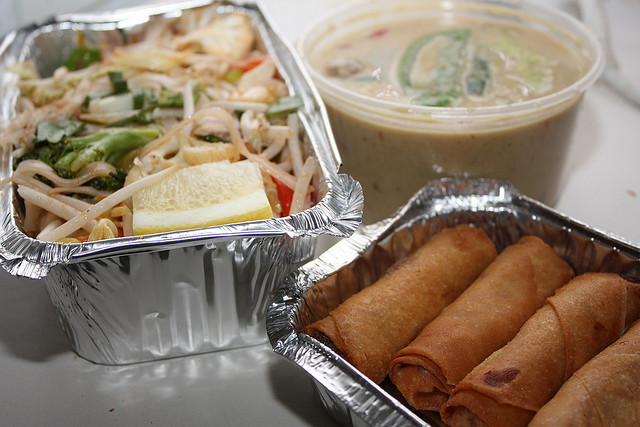
This is especially true when it comes to Thai food: while most entrees are packed with vegetables and lean meats, and may read as healthy options on the menu, they often come swimming creamy curries or sweet sauces that quickly undermine your good intentions. Choosing a healthy option requires a little bit of knowledge, a few rules of thumb, and, in some cases, careful modifications to what arrives in the delivery bag.
While everyone’s health goals are different — a coworker set on reducing calories may want to order a different office lunch than someone watching their sodium intake — here are four tips that will set you up for success on Thai takeout day at the office. These suggestions are based on dishes you’re likely to find on any Thai restaurant menu, but of course preparation methods and ingredient choices can vary widely!
Tip #1: Steer clear of coconut milk-based curries.
Thai curries are delicious: a zing of spice mellowed by the coolness of coconut milk. Unfortunately, that coconut milk also comes loaded with saturated fat and calories. Avoid curries altogether (sad, we know!) in favor of stir-fried dishes with lots of vegetables. For entrees, this includes items like Gai Pad Mamuang Him Ma Pahn (cashew chicken) — the cashews, like most nuts, offer healthy fats that lend this dish a more nutrient-packed punch. Another option to look for is a simple shrimp, tofu, or chicken in basil sauce stir-fry.
Tip #2: Build a meal of starters.
The healthiest options on a Thai menu are in the appetizer section, so consider building your own meal by ordering a few starters. Seafood summer rolls are a no-brainer: delicate rice paper filled with fresh vegetables like carrots, broccoli, and cabbage, along with a serving of diced shrimp. Tom Yum soup is another winner: this hot and sour soup is broth-based and studded with lean meat or shrimp and mushrooms. Finally, the spicy green papaya salad known as “Som Tam” is full of fresh vegetables and fruits, and a refreshing companion to the earthy Tom Yum soup. Bottom line: all three are packed with flavor and texture, so you won’t feel like you’re missing out on anything despite skipping the entree section!
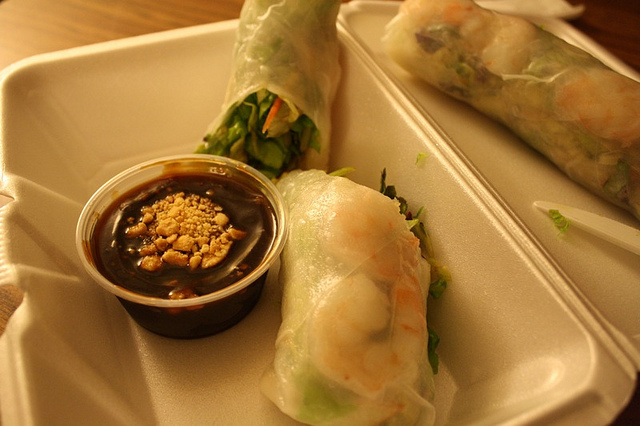
Tip #3: Satay it up.
Sometimes served as an appetizer, sometimes as an entree, satays are meat skewers, usually grilled (one of the healthiest preparations), and coated with spicy peanut sauce. Opt for chicken to get the leanest choice, and don’t go overboard with the sugary sauce, but overall this meal is a protein powerhouse perfect for low-carb diets. It may be found in the appetizer section as well, but since it’s just straight-up meat, it’s generally quite filling as a main dish!
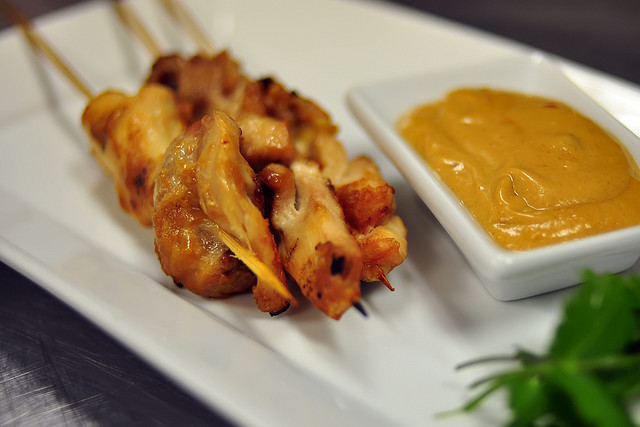
Tip #4: Split whatever you order.
Thai restaurants in America are no exception to the rule of huge portions, even at lunchtime. Arrange with a like-minded coworker to share a meal, or dish half of your order out onto a real plate and save the rest for the next day. Especially if you eat lunch at your desk, you’re likely to continue mindlessly eating after you’re full… but you can avoid that trap if the remainder of your oversized office lunch is safely tucked away in the fridge!
Crafting a healthy Thai lunch may require a little legwork, but getting it to your office is easy with help from Waiter.com. With an extensive selection of restaurants, easy online ordering, and prompt delivery, you’ll be chowing down — healthily — in no time!
In Charge of Company Catering? Here’s What You Need to Ask Your Coworkers
Last Updated on 2014-04-14 09:55 AM
If you’re an administrative assistant or office manager responsible for ordering lunches, handling catering orders, and planning staff parties, then you know how tricky it can be to please all the palates in a modern office! Between dietary restrictions and picky eaters, in fact, being in charge of company catering can seem like a Herculean task. Make your life easier by compiling a short questionnaire (voluntary and confidential, of course) and keeping a basic spreadsheet of your coworkers’ likes, dislikes, health-focused dietary goals, and special occasions.

Image source: flickr user katielou33
After all, the goal of office meals is to show appreciation, promote teamwork and social bonds, and create a positive workplace culture. While you may not be able to meet all needs at all times, making the effort will go a long way — and at least you’ll avoid ordering a chocolate ice cream cake for a party, only to discover the birthday girl doesn’t eat dairy. Here are the essential questions to ask your coworkers:
Do you have any allergies?
Allergies in the office are more common than most of us probably suspect, with research showing that as many as 15 million Americans suffer from food allergies. Luckily, only eight foods are deemed responsible for the vast majority (up to 90%) of allergic reactions: milk, eggs, peanuts, tree nuts, soy, wheat, fish and shellfish. Find out if any of your coworkers suffer from allergies, and you can plan celebratory meals accordingly so that every staff member can participate.
Do you experience any sensitivity to gluten or dairy?
Many of your coworkers may have dietary sensitivities that cause upset stomachs or digestive issues, but aren’t necessarily allergic reactions; two of the most commonly cited sensitivities are gluten and dairy, both which can be difficult to digest for many adults. Gluten-free diets are on the rise, with almost a third of Americans reporting they’re interested in trying to avoid gluten; meanwhile, lactose intolerance leaves many adults feeling unwell after eating ice cream or drinking milk.
Image source: flickr user CPXi
Are you trying to meet any diet goals?
Between the rise of obesity, diabetes, and other chronic illnesses, serving primarily healthy food to employees should be on the forefront of every company catering plan. Still, if your colleagues are trying to cut back on sugar or avoid highly processed carbohydrates, you can make sure to provide diet-friendly alternatives at every occasion (yes, even birthdays).
Do you practice a vegetarian or vegan diet? Would you like to see vegetarian options at staff meals?
These are two very different questions. While only five to six percent of Americans describe themselves as vegetarians (and less than one percent are vegans), many more are actively trying to cut back on meat consumption, especially on Mondays. Find out if your officemates would appreciate meat-free options at staff meals, and take a cue from plant-based, pescetarian-friendly diets like the Mediterranean diet or the heart-healthy DASH diet to serve tasty, meatless office lunches.

Image source: flickr user silver marquis
What’s your favorite kind of cuisine (Italian, Mexican, Indian, etc.)? What’s your favorite dessert?
Don’t just find out what your coworkers don’t like to eat — find out what they love! When you’re celebrating success in their department or an individual milestone, it will be even more meaningful if your coworkers find their favorite dishes waiting for them on the catering table.
When’s your birthday?
Because whether you celebrate individually or with a monthly group party, birthdays are a great excuse to break up the office routine!
When it comes to office lunches and special celebrations, Waiter.com can help ensure every employee can participate with a delicious, diet-friendly meal! And with easy online ordering and Virtual Cafeteria Service, we make life easier for the busy admin assistants in charge of the company catering plan.
Boost Energy Levels at Office Lunches with These Top 5 Whole Grains
Last Updated on 2014-04-14 09:52 AM
One of the simplest ways to feel better all day at the office — more energized, happier, and more productive — is to eat whole grains. Study after study has shown that including whole grains at meals can help prevent the dreaded afternoon energy slump.
Image source: Flickr User Lorika13
What makes a whole grain whole? Essentially, its most nutritious parts — the germ, endosperm, and bran — haven’t been removed in processing (unlike what happens to the flour in white bread). Whole grain sources deliver more fiber, vitamins, and other nutrients, but their real attraction for the typical office worker is that they release energy more slowly than their highly-processed cousins. That means less of a blood sugar spike right after lunch, and less of a crash at 3pm. Whole grains are also easy to sneak into your office lunches. Here are a few easy ways to swap in whole grains and do your afternoon energy levels a big favor:
Brown rice — Not only is brown rice rich in nutrients like selenium and niacin, but it has more fiber than white rice. Since fiber slows the rush of glucose into the bloodstream after eating, that means you’ll get a slower release of energy throughout the day — the whole basis for the argument that whole grains promote better energy levels. So in your Chinese takeout box or sushi order, always opt for brown rice. This is probably the easiest swap you can make!
Image source: Flickr User roboppy
Quinoa — There’s a reason this grain-like seed (pronounced “keen-wah”) is at the top of many whole-grain lists! Not only is quinoa full of fiber: it’s also high in protein, giving your body a long-lasting source of energy to get through slow-moving afternoons. If you always go for pasta salad or mac & cheese as a side dish, look for a quinoa salad instead.
Bulgur — Its name might not sound as elegant as “quinoa”, but bulgur is a nutritional powerhouse nonetheless. A kind of dried wheat kernel, bulgur is rich in fiber (are you sensing a pattern here?) and also has fairly high levels of B vitamins. If you like Middle Eastern or healthy Mediterranean food, chances are you’ve eaten bulgur: it’s the nutty grain found in tabbouleh, which is delicious and should work its way into your regular lunch rotation!
Whole wheat — Whether part of your deli sandwich, burrito wrapper, or in your pasta bowl, opting for 100-percent whole wheat items is one of the kindest moves you can make for your energy levels. The only trick is asking if the bread, tortilla, or pasta is actually made from 100-percent whole grains: many offerings touted as “made with whole grains” only have a portion of the good stuff, and the rest is made up with the same kind of refined flour in white bread. Remember: just because it’s brown doesn’t mean it’s actually whole wheat.
Popcorn — Yes, it’s true! Popcorn is a whole grain, and when it’s not coated in butter, makes a smart alternative to chips or pretzels as a crunchy side or energy-boosting snack.

Image source: Flickr User ckschleg
The bottom line is that those afternoon energy slumps aren’t inevitable. Smart office lunches can leave you feeling refreshed and rejuvenated, and Waiter.com is the smart choice to bring wholesome meals into your workplace!