
Why You Should Invest In Your Office Break Room to Boost Productivity
Last Updated on 2025-12-04 02:46 PM
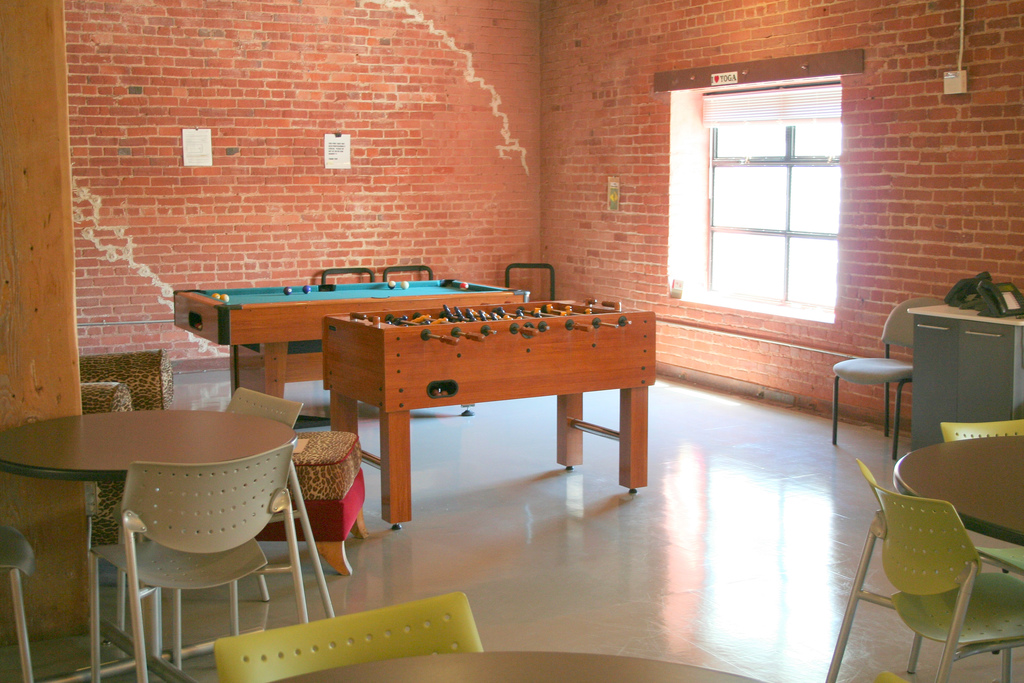
Your office break room can be a magical place.
Hold up, don’t click away from the page yet. We said can be, not is. And yes, “magical” is something of a strong word, especially in our current era. But bear with us for a moment. The break room inhabits a kind of liminal space: it’s attached to your office, but it’s not exactly a designated workspace. Employees may go there to snack, to catch up, or just to escape from the pressures of the workday for a few minutes.
A break room is an important part of any business because employees need somewhere to decompress. It also serves as a place for them to connect and interact with each other in a non-official capacity. In a break room, people from all levels and all departments can meet and hang out and see the people behind the Slack handles and witty email messages.
There’s a reason why so many companies — from small repair shops to tech giants — have break rooms. While they may vary in size and what they contain, they can have a huge impact on employee experience and retention, and frankly, they’re usually not all that expensive.
Today, we’re going to discuss why break rooms are so important, how you can set up yours, and what kind of extras you should look into.
WHY THE BREAK ROOM MATTERS
During the pandemic, many an office worker got a taste of the remote life, and a lot of them quite liked it. We aren’t here to argue whether in-office is better than remote, or vice versa, but we do acknowledge that there is a certain coziness to working from your couch while wrapped in a heated throw.
With that said, there are certain advantages to working in the office: it’s usually easier to get hold of and collaborate with colleagues; a separation between the workplace and living place can be good for mental health; and there’s the socialization aspect to think about.
Let’s talk more about the social aspect of work. Most of us are not heads-down working a full eight or nine hours a day, even if we pretend to be. We get up, we stretch, we get a coffee refill or some water. That time away from the work itself is particularly important, as it gives the working mind something of a break — which we need if we want to stay focused for long stretches of time. The break room, then, becomes the place where employees go to recharge.
It’s also a place that can encourage employee bonding. You want your employees to get along, by the way; people who like each other tend to work together far better and put in extra effort to help each other out if they need it. That kind of workplace cohesion and employee harmony is priceless, and the break room is often where it happens. Think chance meetings at the fridge, or idle discussion about the latest reality TV show while waiting for a fresh pot of coffee to brew. Or maybe a picture of an employee’s new pup has sparked conversation about dog-friendly parks, and suddenly a group of people are headed to the beach with their canine companions on Saturday.
This is the real benefit of being able to work in-office, even if it’s in a hybrid and not full-time capacity. Remote work can be comfortable, but it can also be isolating. Work is work, but work can also be the place where employees get in some much-needed mingling.
That’s where the break room comes in.
WHAT DO YOU NEED IN AN OFFICE BREAK ROOM?
Before going any further, we want to point out that what we suggest may not be feasible for all companies. Maybe you don’t have the space or finances for some of the workplace break room design suggestions we’re about to provide. That’s all right. But gone are the days when a half-functioning fridge and a dust-crusted fan were the only perks of a break room — businesses now must do better.
The ideal modern company break room should include:
- Multi-use areas. Your hybrid people may want quiet nooks and places where they can be still, while your local extroverts are going to want tables to gab around.
- A hydration station. Provide a place for employees to get clean, tasty water (either from a cooler or a filter) and other beverages, like tea and coffee.
- Snacks. One of the perks of working from home is eating pretty much whenever you want. Recent surveys have suggested that 90% of office workers want access to food and beverage options while on-site; the break room is the natural home for all those snacks. Aim for a blend of healthy (fruits and dried veggies) and sweet (granola bars, Cheez-its, etc.) to keep everyone happy.
- Appliances. You’ve got snacks, so make sure you have a fridge and a microwave, too. We don’t know if we’d go so far as to suggest a full-on stove or oven, but it’s not unheard of in modern workplaces.
- Electrical outlets. These days, everyone has their phones, tablets, or laptops on them, and those devices need juice like a writer needs coffee. Make sure you’ve got plenty of outlets scattered around the break room; bonus if you also provide cables compatible with their devices. (No need to go wild on this: there are far too many cables out there. But get some for the most recent models of phones, at least.)
You should also keep the following office break room ideas in mind:
- Natural light. Too many break rooms are completely internal, with no windows at all. But natural light is good for us (improving Vitamin D uptake, among other things), and if you can select a break room with windows, skylights, or other access to the outdoors, so much the better.
- Color theory. It’s believed that colors can have an impact on the psyche. Blue is generally associated with calmness; red with energy, and green, interestingly enough, with creativity. Avoid the stark white walls of the standard company break room and look into the psychological impact of various shades.
- Plants. Again, not every workplace is equipped to manage plants, but setting up some plants in the break room can encourage a sense of relaxation. And hey, remember what we said about green possibly spurring creativity? Lots of plants are green.
- Fun stuff. Obviously, “fun” is going to depend on what your employees want and what the budget is, but look into a TV set (set off in a corner, so people can watch it without bothering others) and a streaming music service. You might also consider games (both video and board), pencils and paper to draw on, and maybe even a company library/book trade.
HOW TO MAKE YOUR BREAK ROOM PART OF THE COMPANY CULTURE
While the break room remains separate from work, it’s still part of the workplace. It can serve as a representation of your company culture and remind folks that they’re a valuable part of a team, even when they’re just rooting around in search of snacks.
Here are some ideas to help you get your employees involved:
- Ask for their help in decorating. Send out a survey asking for input on colors, decor, and more. You could even hold a painting party of sorts and hang the resulting art in the break room — now that’s employee contribution!
- Set up a bulletin board. Most employees probably have a cause or two they’re passionate about. Let them post flyers or informational slips about these causes on a bulletin board. The bulletin board is also a great place to highlight company news, give promotions and accomplishments the shout-outs they deserve, and post things like coupons or events.
- Organize department meals. Providing food for your employees goes a long way in making them feel valued. You don’t have to stop at snacks, either; bringing in full meals from local restaurants creates an excuse for everyone to stop their work, sit down, and, well, break bread together.
- Go green. If environmental sustainability is important to your company, reflect that value in the break room! Provide reusable mugs, plates, and silverware, and order non-toxic cleaning supplies for daily tidying. Offer a recycling bin, provide personalized reusable water bottles with the company logo.
- Encourage people to just hang out. Yes, people can work in the break room if they want, but remember, actual breaks from work are good for us. That’s why it’s called a break room.
- Create a cleaning plan. Yes, everyone in the office is an adult and should clean up their own mess, but sometimes urgent phone calls or unexpected meetings mean an unwashed dish is left behind in the sink or a table is laden with crumbs. If a professional cleaning staff isn’t an option, create a rotating schedule of team members responsible for keeping the space tidy, and reward those team members with an extra day of vacation time or a special catered lunch once a month. A little advance planning can help maintain a cohesive team atmosphere and keep dirty-dish-related conflict to a minimum.
TURN THE BREAK ROOM INTO AN EATING ROOM
OK, maybe “eating room” is too strong a term, but we want to go back to the whole “feed your employees” thing. You want your people to associate the break room with good things. We firmly believe there are few things better than food.
Nutrient-dense meals are excellent ways to boost mood and productivity. Sitting down to share said nutrient-dense meals can amplify those effects. We’re not great at math, but even we can see that Food + Colleagues can be an awesome way to bring a team together.
It can also become very expensive and very impractical. Your people might end up spending hours cooking in the break room or hours in traffic trying to pick up their meals. The easy answer to this, of course, is a meal delivery service. Employees get their delicious meals, and you don’t need to invest thousands in a state-of-the-art kitchen.
Here are a few ideas to kick this off:
- Let separate departments bring in lunch on their primary in-office days.
- Bring in a different type of cuisine (Japanese, Indian, Thai, etc) each week or month.
- Set up team lunches that don’t focus on work on a weekly or monthly basis.
- Organize recurring meal delivery for standing meetings or one-off meals for when you’re all just feeling peckish.
In addition to just being tasty, meal delivery allows you to gauge certain metrics around retention:
- What does voluntary turnover look like six months after implementation? What about a year?
- How many hours are being saved per employee per month when compared to how much time they’d be spending getting food off-site?
- How are employees feeling after eating catered meals in the break room? Has their fatigue declined? Are they feeling more energetic and positive about work? (We suggest sending around an anonymous survey to find out.)
WE WANT TO HELP YOU EAT
Putting together the perfect office break room can take a lot of work. Ordering food to eat in that break room shouldn’t.
We built Waiter around the idea that employees need and deserve to eat well to do good work. We’ve been at this for decades, so yeah, we’re kind of highly knowledgeable in this area. We’ve got a variety of options — from delivery in under an hour to lavish holiday meals planned months in advance — and one of them is bound to suit your company’s needs.
So go on. Give us a call. Let us turn your break room into a feasting hall.